A Dramatic Size Difference
The great blue heron stands up to 4.5 feet tall with a wingspan approaching 6 feet, making it one of the largest herons in North America, while the green heron measures only about 18 inches long — small enough to be mistaken for a crow at a distance.
Different Hunting Styles
The great blue heron typically hunts by standing motionless or wading slowly in open water before striking at passing fish, while the green heron is one of the few known tool-using birds, sometimes dropping bait such as insects or bread onto the water's surface to lure fish within striking range.
Coloring and Camouflage
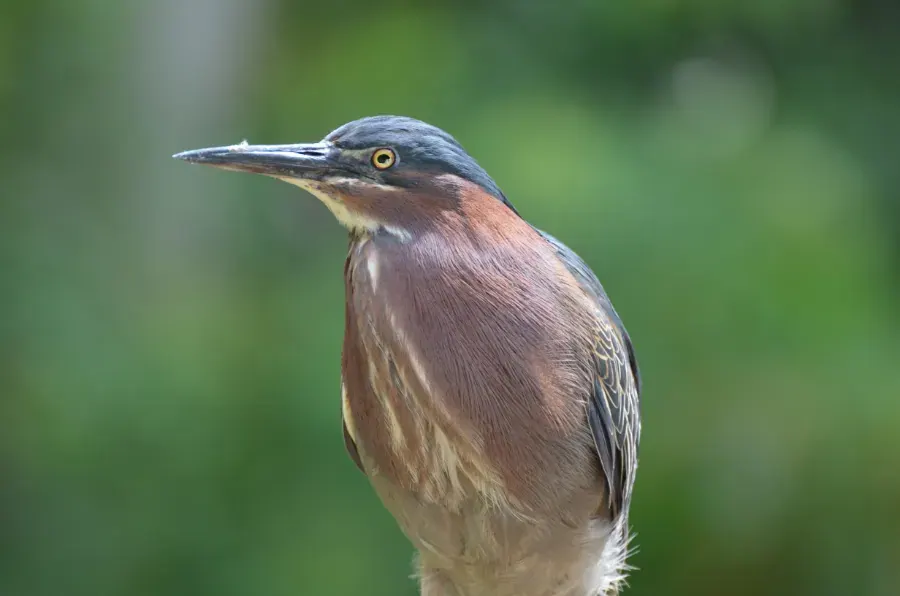
The great blue heron has soft blue-gray plumage suited to open marshes and shorelines, while the green heron has a dark, glossy greenish-black cap and chestnut neck that provide better camouflage in the dense, shaded vegetation along smaller streams and ponds it typically favors.
Different Preferred Habitats
The great blue heron ranges across large lakes, rivers, coastlines, and marshes throughout North and Central America, while the green heron prefers smaller, more secluded wetlands with overhanging vegetation, making it a much harder species to spot despite being fairly common.