A Vulnerable but Not Yet Critical Species
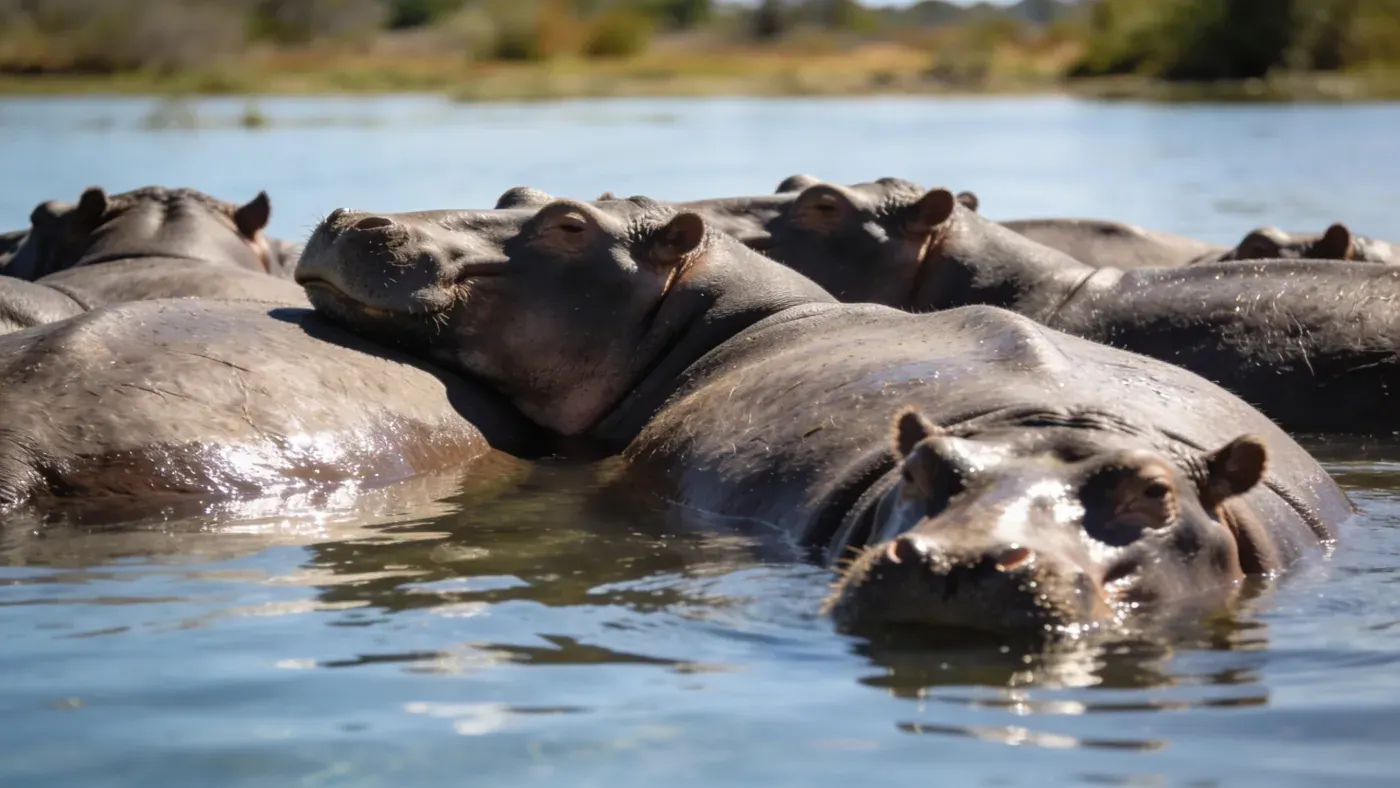
The common hippo is listed as Vulnerable, with a wild population estimated between 115,000 and 130,000, spread across river systems and lakes throughout sub-Saharan Africa. Numbers have declined significantly over recent decades, though the species is not yet at the acute risk level of the rhino or several other large African mammals.
Habitat Loss From Water Demand
Hippos depend on year-round deep water to submerge in through the dry season, which puts them in direct competition with agricultural irrigation and dam projects that reduce river flow and shrink the pools they need to survive between rainy seasons. Drought years, worsened by upstream water diversion, have caused significant local die-offs.
Poaching for Ivory and Meat
Hippo tusks, made of a dense ivory considered by some carvers superior to elephant ivory, have driven a persistent poaching trade, particularly following restrictions on elephant ivory that shifted some demand toward hippo canines. Hippos are also hunted for bushmeat across much of their range.
Conflict With Farmers
Nighttime grazing brings hippos into frequent contact with crops planted near rivers, and the resulting damage often leads to retaliatory killing by farmers — a pattern of conflict similar to that faced by elephants, and one of the leading pressures on hippo populations outside formally protected reserves.
The Pygmy Hippo’s Steeper Decline
While the common hippo’s status is Vulnerable, the much rarer pygmy hippo is listed as Endangered, with under 2,500 individuals remaining in fragmented West African forest habitat — a reminder that the hippo family includes one species with real conservation urgency alongside one that is merely declining.