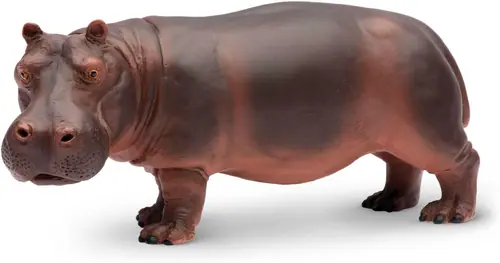
A Life Split Between Water and Land
A hippo spends up to 16 hours a day submerged in rivers and lakes, surfacing every few minutes to breathe without fully waking, and emerges onto land only after dark to graze. This near-total daytime submersion keeps its huge body cool and its bare, sun-sensitive skin protected in a climate that would otherwise dehydrate it quickly.
Built to Float, Not Swim
Despite the popular image of hippos swimming, they mostly walk or bound along riverbeds rather than swimming in open water, pushing off the bottom with each stride. Their dense bone structure and relatively small lungs for their size give them close to neutral buoyancy, letting them sink and walk along a riverbed with ease.
The Whale Connection
Genetic and fossil evidence places hippos as the closest living land relative of whales and dolphins, sharing a common semi-aquatic ancestor roughly 55 million years ago before the cetacean lineage returned fully to the sea and hippos remained amphibious.
Blood Sweat
A hippo’s bare skin secretes a thick, reddish fluid, popularly called blood sweat, that is neither blood nor sweat but a unique compound acting as sunscreen, moisturizer and natural antiseptic — a real biological innovation still studied for possible medical applications.
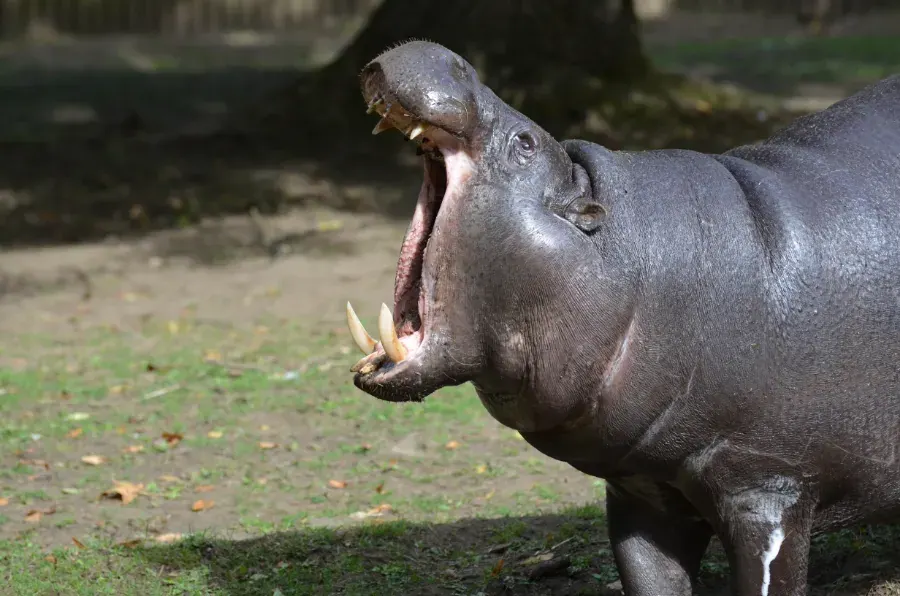
Tusks for Fighting, Not Feeding
A hippo’s enormous curved lower canines, which can reach 20 inches, are used almost exclusively in fights between males over territory and mates, not for feeding — grazing is done entirely with the wide, muscular lips.