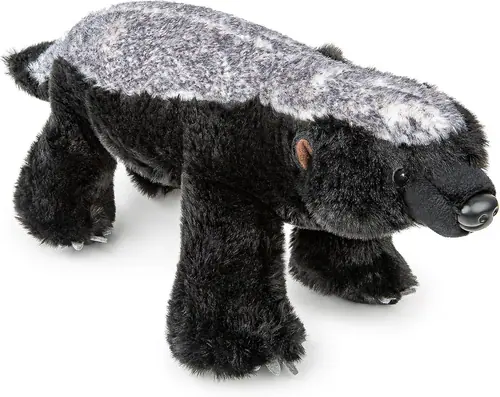
Mammals · Mustelids
Honey Badger
Mellivora capensis
Least Concern
The honey badger, also known as the ratel, is a small but famously fearless member of the weasel family found across sub-Saharan Africa, the Middle East, and parts of South Asia. Despite weighing as little as 20 pounds, it will confront animals many times its size, aided by thick, loose skin, powerful jaws, and a reputation — earned through repeated documented encounters — for simply refusing to back down. Honey badgers are also highly opportunistic omnivores, equally at home raiding a beehive or killing a venomous snake.
Classification
Kingdom: Animalia
Phylum: Chordata
Class: Mammalia
Order: Carnivora
Family: Mustelidae
Subfamily: Mellivorinae
Genus: Mellivora
Species: capensis
Size
22–30 in. long, tail 8–12 in.; males 20–40 lbs, females notably smaller.
Habitat
Savanna, grassland, forest, and desert across sub-Saharan Africa, the Middle East, and South Asia.
Description
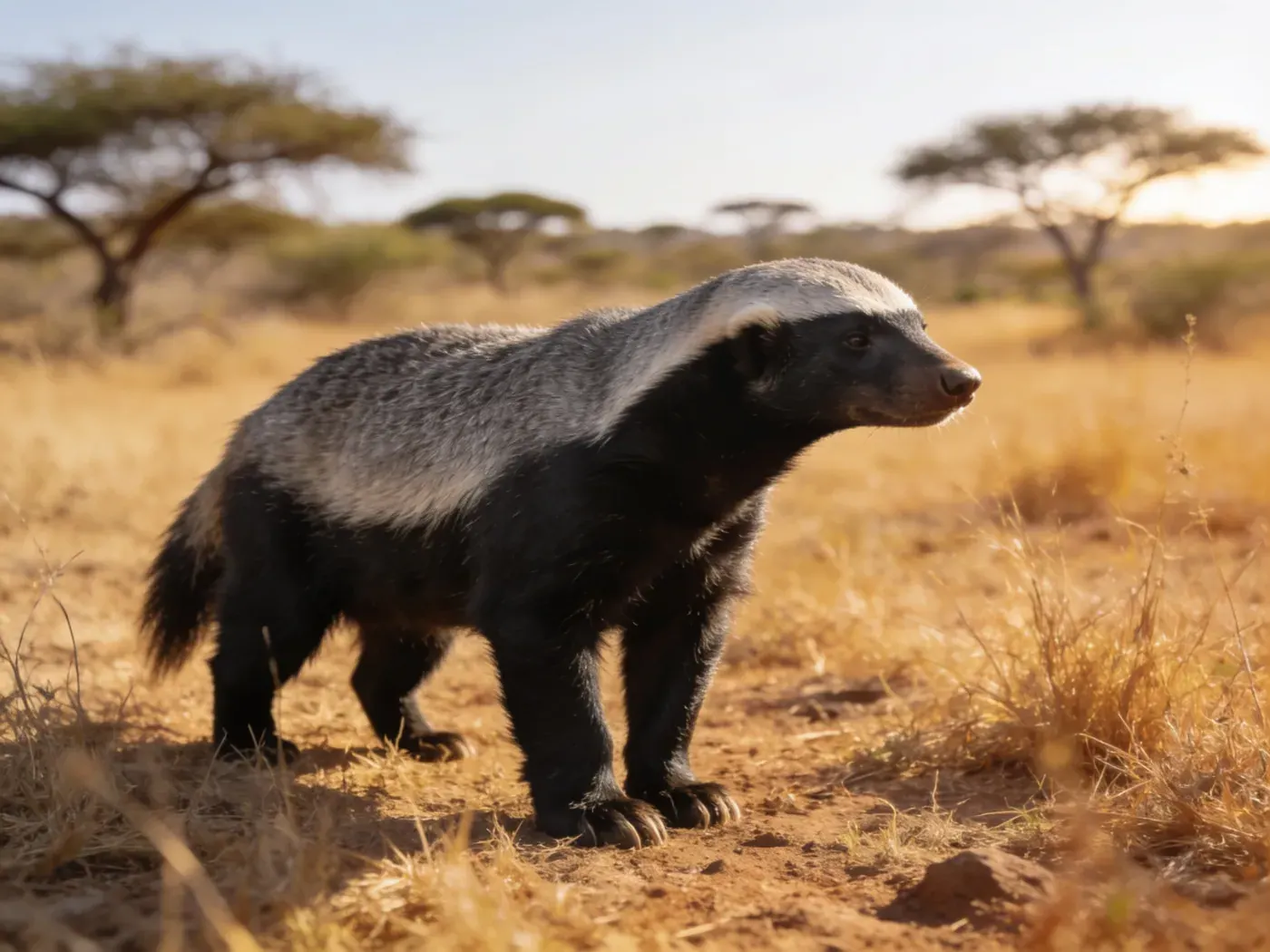
Black body with a broad grey-and-white mantle across the back; thick, loose-fitting skin.
Diet
Omnivore — rodents, insects, snakes (including venomous species), fruit, and honey or bee larvae.
Senses
Excellent sense of smell and hearing; modest eyesight.
Communication
Growls, screams, and grunts; scent-marks territory using an anal gland.
Gestation
Around 50–70 days.
Birth & Litter Size
Usually 1–2 cubs, born in an underground den.
Sexually Mature
Females around 1 year; males somewhat later.
Life Span
7–8 years in the wild; up to 24 years recorded in captivity.
Social Structure
Largely solitary; adult males roam very large territories and rarely interact outside of mating.
Did You Know?
The 2002 edition of Guinness World Records named the honey badger the "most fearless animal in the world," citing its willingness to confront predators far larger than itself.
Did You Know?
A honey badger's skin is so thick and loosely attached that it can twist around within it, letting the animal bite an attacker even while it is being held by the neck or back.
Did You Know?
Honey badgers have partial resistance to snake venom, allowing them to survive bites from venomous snakes that would kill most mammals of similar size — though a large enough dose can still be fatal.
Honey Badger in Foreign Languages
Afrikaansratel
Frenchratel
GermanHonigdachs
Spanishtejón melero
Portuguesetexugo-do-mel
Italiantasso del miele
Dutchratel
Swahilinyegere
Zuluinsele
Hindiratel
Arabicghurayr al-'asal
Turkishbal porsuğu