Classification & Appearance
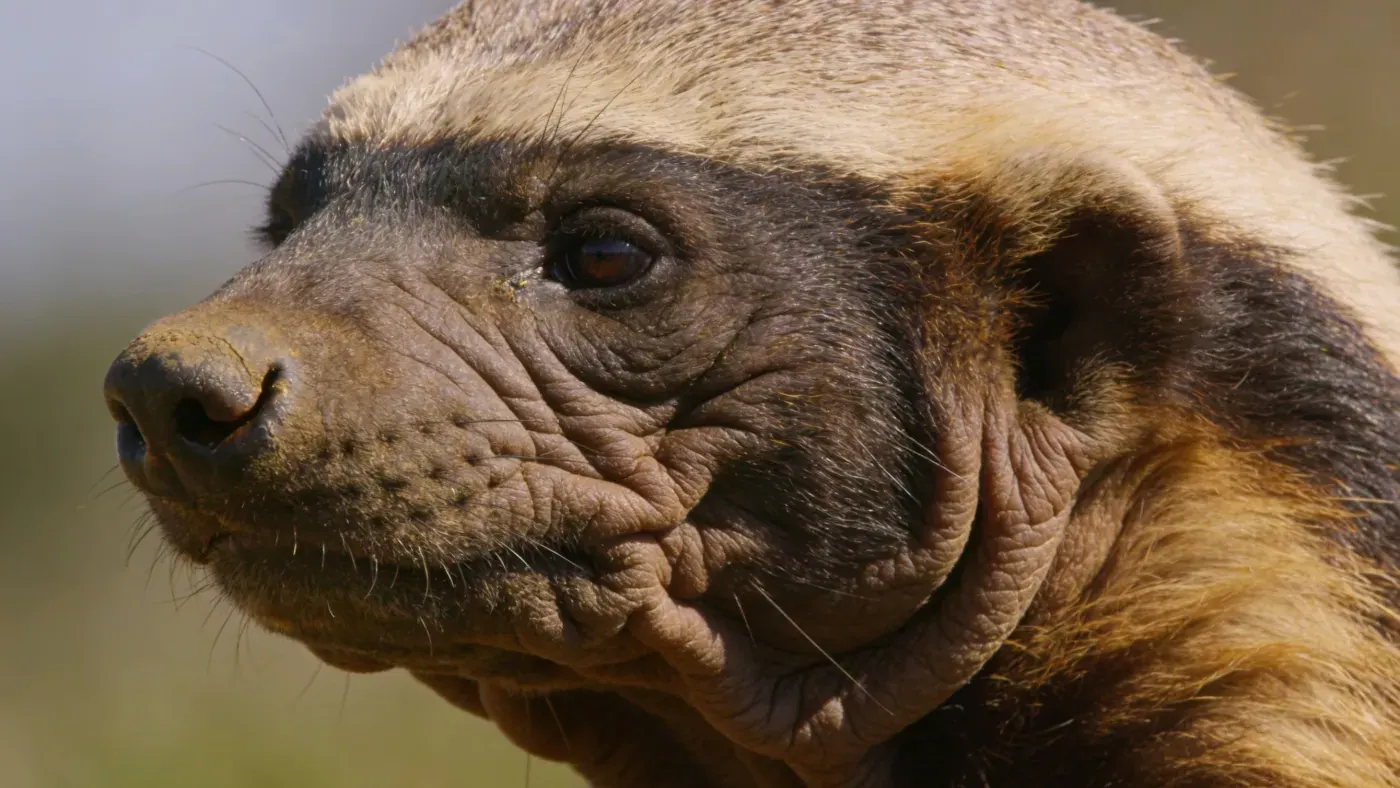
The honey badger's scientific name is Mellivora capensis, and despite the shared name, it is not closely related to the Eurasian or American badgers — it belongs to its own subfamily, Mellivorinae, within the weasel family Mustelidae. Its coat is a striking two-tone pattern: jet black underneath, with a broad grey-to-white mantle running across the top of the head, neck, and back, a coloring some researchers believe functions as a warning signal to potential predators.
Thick, Loose Armor
A honey badger's skin is remarkably thick — tough enough to resist porcupine quills, bee stings, and many snake bites — and loosely attached to the body underneath. That looseness lets a honey badger twist and turn within its own skin even while gripped by a predator, often allowing it to bite back at an attacker that believes it already has the upper hand.
Built to Dig and Fight
Long, curved front claws make honey badgers formidable diggers, capable of excavating a new den in minutes when needed. Combined with powerful jaws that can crack open tortoise shells and bone, and a low, muscular build, a honey badger is disproportionately dangerous for its modest size — a trait well documented in encounters with lions, leopards, and even venomous snakes.
A Wide, Adaptable Range
Honey badgers occupy one of the largest ranges of any African carnivore, found from dense forest to open desert, sea level to high mountain slopes. This adaptability, combined with a wide-ranging, opportunistic diet, is a major reason honey badgers remain widespread and classified as Least Concern despite ongoing conflict with farmers who see them as a threat to livestock and beehives.