Breeding in a Solitary Species
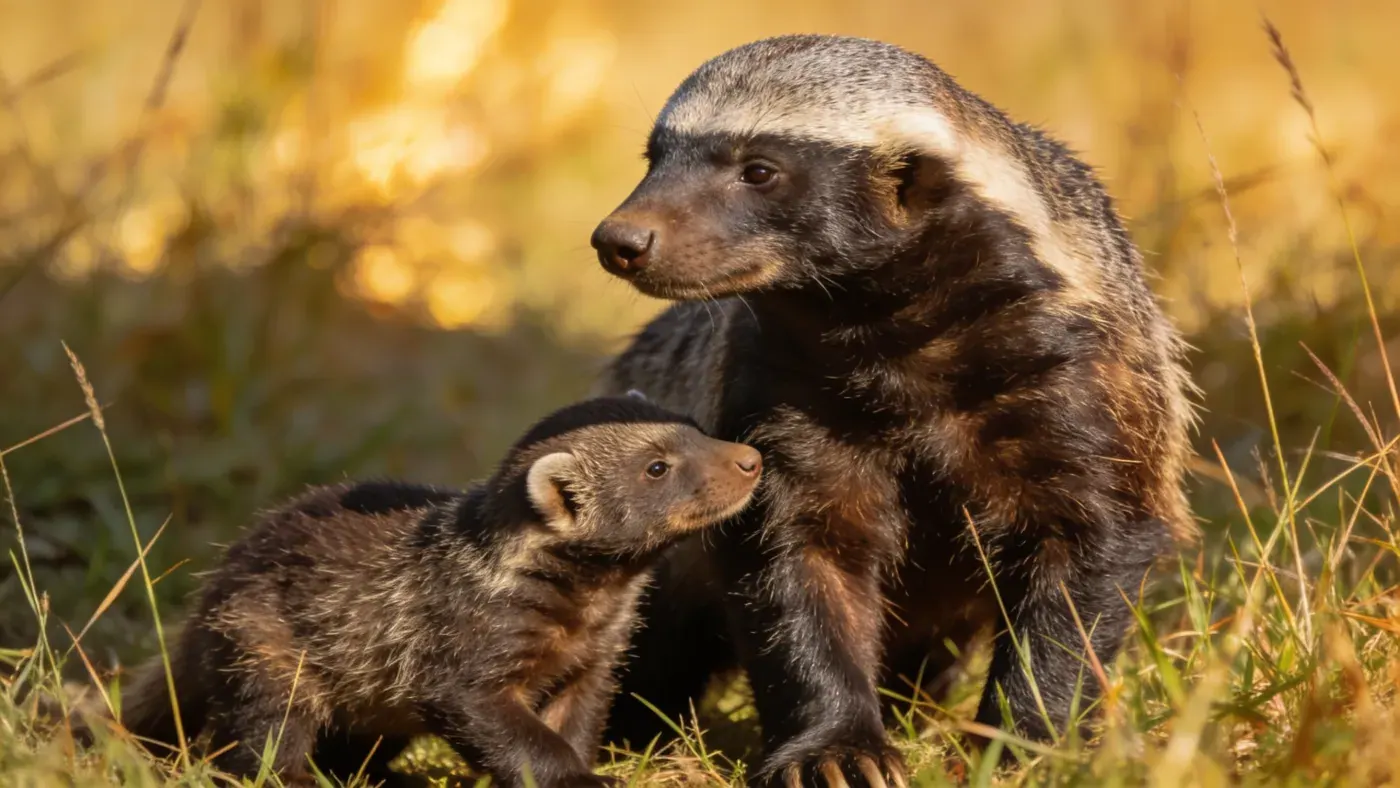
Honey badgers don't follow a strict breeding season in most of their range, mating opportunistically throughout the year. Because adults are largely solitary and roam huge, only loosely overlapping territories, males and females come together only briefly to mate before going their separate ways — all cub-rearing responsibility falls to the mother.
A Short Gestation
Gestation lasts roughly 50 to 70 days, after which a female typically gives birth to one or two cubs in an underground den, sometimes a burrow she has dug herself and sometimes one taken over from another animal. Newborn cubs are blind and largely helpless, covered in thin, pale fur that darkens as they grow.
A Long Apprenticeship
Compared to many mustelids, honey badger cubs stay with their mother for an unusually long time — often more than a year — learning to dig, forage, and handle dangerous prey like snakes and scorpions safely. This extended period reflects just how much specialized, risk-laden skill goes into surviving as a honey badger, from judging which snakes are safe to grab to knowing how to break into a defended beehive without serious injury.
Independence and Adult Life
Once a young honey badger disperses from its mother, it establishes its own large, overlapping home range and settles into the solitary lifestyle typical of the species. Females reach sexual maturity around one year of age, while males mature somewhat later, and both sexes typically live independently for the rest of their 7-to-8-year lifespan in the wild.