A Species Under Growing Pressure
The koala is listed as Vulnerable, and in 2022 the Australian government formally uplisted populations in Queensland, New South Wales and the Australian Capital Territory to Endangered, reflecting a population decline widely estimated at 30 percent or more over the past two decades in parts of its range.
Habitat Loss Is the Core Problem
Land clearing for agriculture, housing and infrastructure has removed and fragmented much of the eucalyptus forest koalas depend on, particularly along the densely populated eastern coast. Because koalas rely on a narrow set of preferred tree species, even partial clearing can make a remaining patch of forest unable to support them.
Bushfires as an Acute Threat
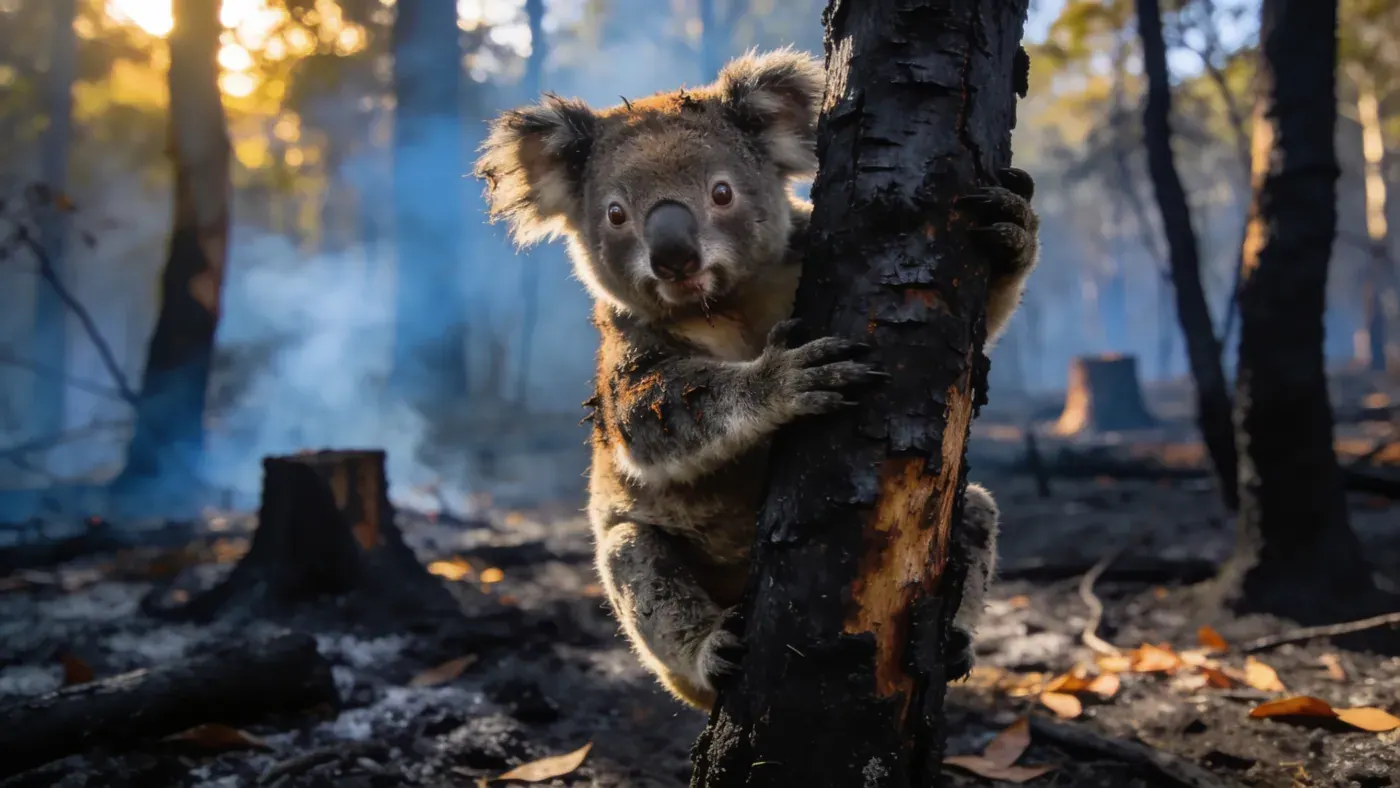
The catastrophic 2019-2020 Australian bushfire season killed or displaced an estimated tens of thousands of koalas and destroyed vast areas of habitat in New South Wales and Victoria in particular — a single climate-linked event that measurably accelerated the species’ decline and drew international attention to its status.
Chlamydia and Disease
A chlamydia infection, unrelated to the human sexually transmitted disease but caused by a related bacterium, is widespread in wild koala populations and can cause infertility, blindness and a fatal urinary tract disease, compounding the pressure from habitat loss in already-stressed populations.
Corridors, Hospitals and Genetic Management
Conservation responses include protecting and replanting habitat corridors so isolated populations can reconnect, dedicated koala hospitals that treat disease and bushfire injuries, and, in some regions, translocation programs to manage genetic diversity in small, isolated groups cut off from the wider population.