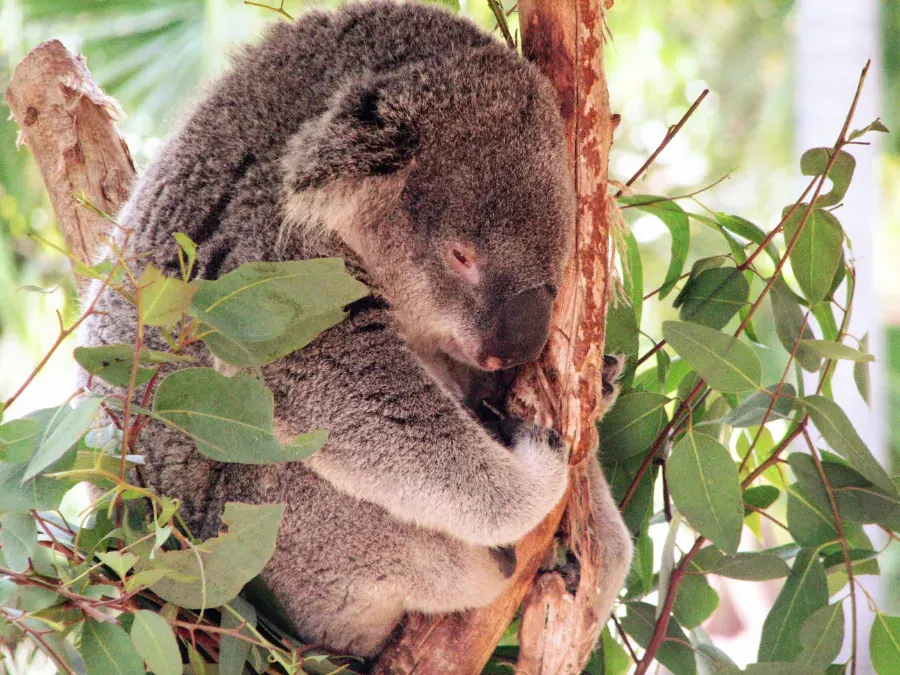
Not a Bear at All
Despite the common nickname "koala bear," the koala is a marsupial with no relation to true bears whatsoever. Its closest living relative is the wombat, and the two share a distant common ancestor within the marsupial order Diprotodontia — a lineage entirely separate from the placental mammal order that contains actual bears.
Built to Climb, Not Run
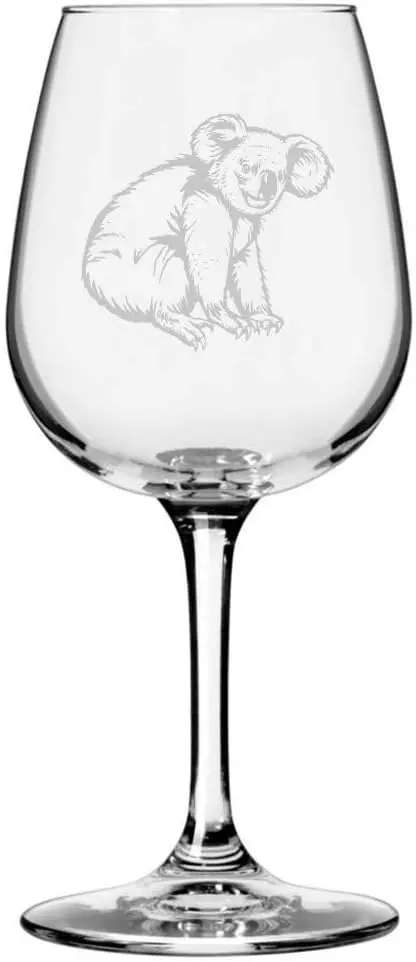
A koala’s hands and feet are specialized for gripping branches: the first two digits on each front paw are opposable, working almost like a thumb and a second thumb, while ridged pads on both palms and soles provide grip similar to a human fingerprint — so similar, in fact, that koala prints have occasionally confused forensic investigators.
A Slow Metabolism to Match a Poor Diet
Eucalyptus leaves are low in calories, high in fiber and laced with toxic compounds that most animals cannot process. A koala’s metabolic rate is roughly 25 percent lower than a similarly sized mammal’s, and it sleeps or rests up to 20 hours a day, conserving the limited energy its diet provides.
The Bellow
Male koalas produce a deep, resonant bellow — startlingly loud and low-pitched for an animal that rarely exceeds 20 pounds — using an extra vocal organ unique among mammals, located outside the larynx itself, that lets a small body produce a call disproportionate to its size.
Regional Size Differences
Koalas in the cooler south, particularly Victoria, are noticeably larger and furrier than their counterparts in tropical Queensland — a reversal of the common pattern where southern populations of many species trend smaller, driven instead by the greater need for insulation in colder climates.