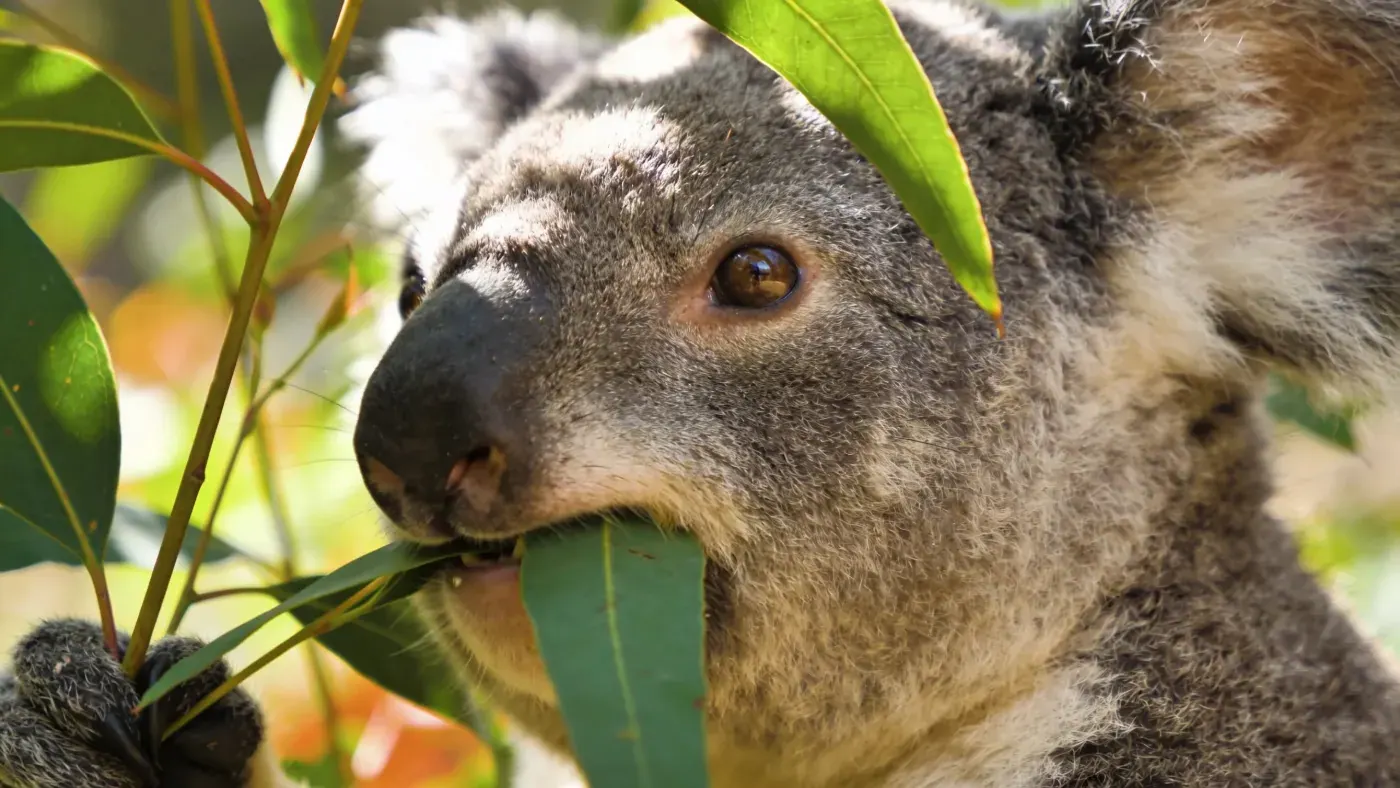
A Diet Almost No Other Mammal Can Manage
Eucalyptus leaves are fibrous, low in calories and laden with toxic compounds called terpenes that make them unpalatable or outright poisonous to most mammals. The koala is one of the very few animals equipped to live on them almost exclusively, a specialization that gives it access to an abundant food source with essentially no competition.
A Detoxifying Liver
A koala’s liver contains an unusually high concentration of enzymes specialized for breaking down the toxic compounds in eucalyptus, allowing it to safely process a diet that would sicken or kill most other mammals. This detoxification comes at a real energy cost, which is part of why koalas move and eat so slowly.
Choosing Among Hundreds of Species
Of the roughly 700 species of eucalyptus in Australia, a koala in any given region typically relies on only a handful — often fewer than ten — chosen for a specific balance of low toxin content and workable nutrition. This selectivity means koala populations can be highly vulnerable if their particular preferred tree species are cleared, even when other eucalyptus remains nearby.
Water From Leaves, Mostly
Koalas obtain most of their water from the moisture in eucalyptus leaves rather than drinking regularly, an adaptation reflected in their very name — commonly said to derive from an Aboriginal word sometimes translated as "no drink," though the etymology is debated among linguists.
A Diet That Explains the Sleep
Because eucalyptus provides so little usable energy per pound consumed, and because detoxifying its compounds itself costs energy, koalas have evolved an extremely slow, low-energy lifestyle to match — sleeping up to 20 hours a day is not laziness but a direct metabolic consequence of the only food source they can rely on.