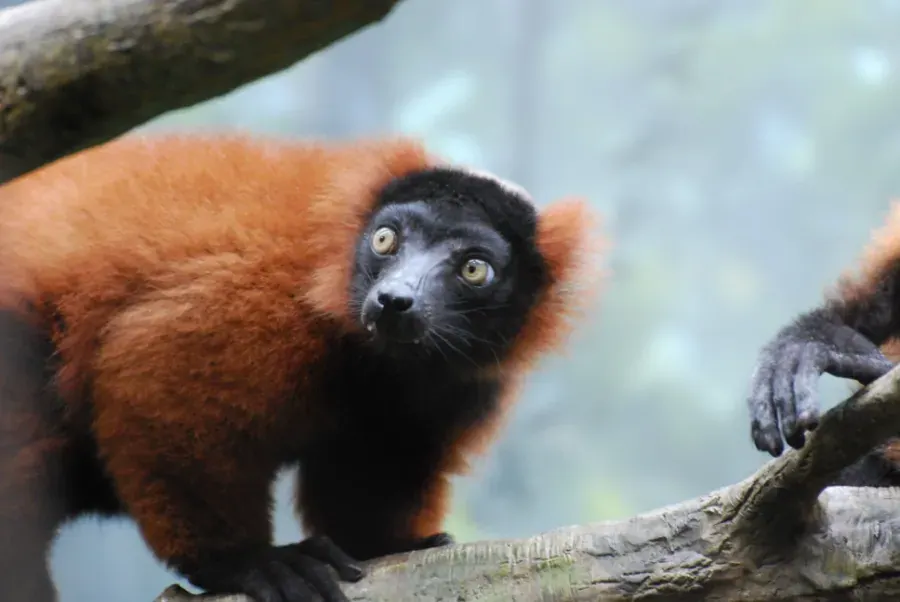
Most Lemur Species Are Nocturnal
While the ring-tailed and sifaka lemurs are active by day, the majority of lemur species, including mouse lemurs, dwarf lemurs, and aye-ayes, are nocturnal, foraging and moving through the forest almost entirely under cover of darkness.
The World's Smallest Primate
Madame Berthe's mouse lemur, a nocturnal species, is the smallest primate on Earth, weighing about an ounce and small enough to fit in a human palm. Its tiny size and nocturnal habits help it avoid the daytime predators that hunt larger lemur species.
Oversized Eyes for Night Vision
Nocturnal lemurs have proportionally enormous eyes relative to their body size, packed with light-gathering cells that allow them to navigate and forage effectively in near-total darkness within the forest canopy.
The Aye-Aye's Unique Foraging Tool
The aye-aye, one of the strangest nocturnal lemurs, uses an unusually thin, elongated middle finger to tap on tree bark and listen for hollow chambers containing grubs, then extracts the insects using the same specialized digit — a foraging method unlike that of any other primate.