The Most Widespread Big Cat
No other big cat covers as much ground as the leopard. It historically ranged across almost all of sub-Saharan Africa, up through the Middle East, and across South and East Asia to the Russian Far East. Much of that range has shrunk, but the leopard still occupies a broader spread of climates and habitats — rainforest, desert edge, savanna, mountain slope, even farmland at the margins of cities — than the lion, tiger or cheetah.
Rosettes, Not Spots
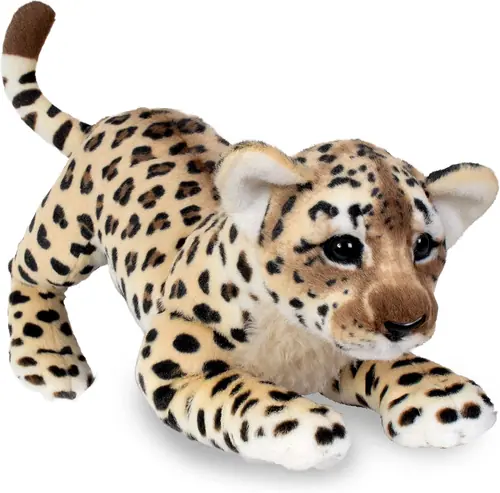
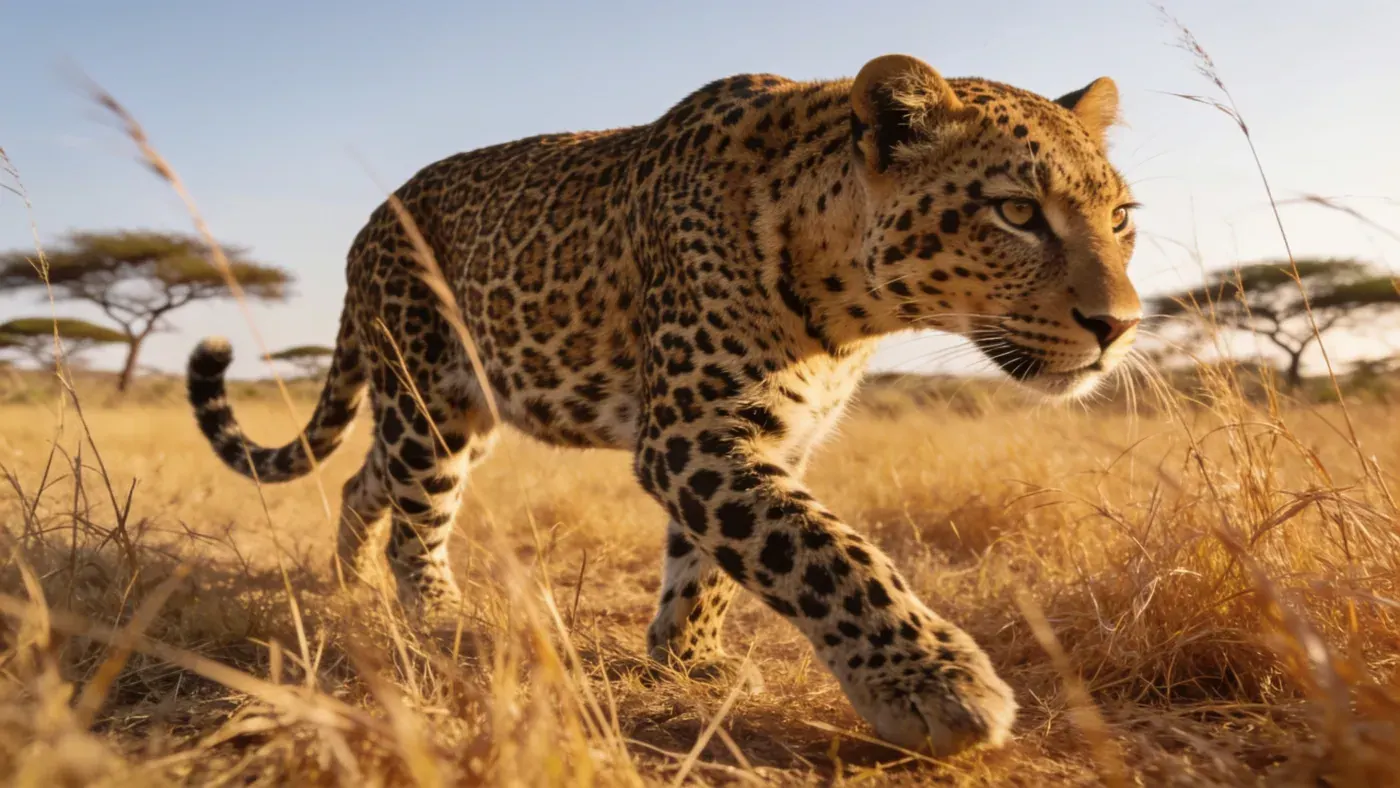
A leopard’s coat is patterned with dark rosettes — open rings of black enclosing a slightly darker gold centre — set on a tawny background, distinct from the cheetah’s solid round spots and from the larger rosettes with central spots that mark a jaguar. Melanistic leopards, popularly called black panthers, occur throughout the range but are most common in the dense, low-light forests of Southeast Asia.
An Adaptable Hunter
Where lions and cheetahs specialise, the leopard generalises. Its prey list runs from antelope and warthog down to monkeys, rodents, birds, fish and insects, and it will scavenge as readily as it hunts. That flexibility, more than raw size or speed, is what has let leopards persist at the edges of farmland and even cities long after other big cats have disappeared from the same ground.
Built for Strength, Not Speed
The leopard is stockier and more heavily muscled relative to its size than a cheetah, with an unusually large skull and powerful jaw and shoulder muscles that let it grip and haul prey far heavier than itself. It tops out around 36 mph, modest for a cat, but that strength is what lets it drag a kill up into a tree, out of reach of lions and hyenas.
Solitary and Elusive
Leopards are mostly nocturnal and almost entirely solitary outside of mating and cub-rearing, defending home ranges that overlap between neighbours but are marked and respected through scent and claw signs rather than open conflict. Their combination of stealth, adaptability and nocturnal habits makes them by far the hardest big cat to reliably see in the wild.