A Habit Almost Unique Among Cats
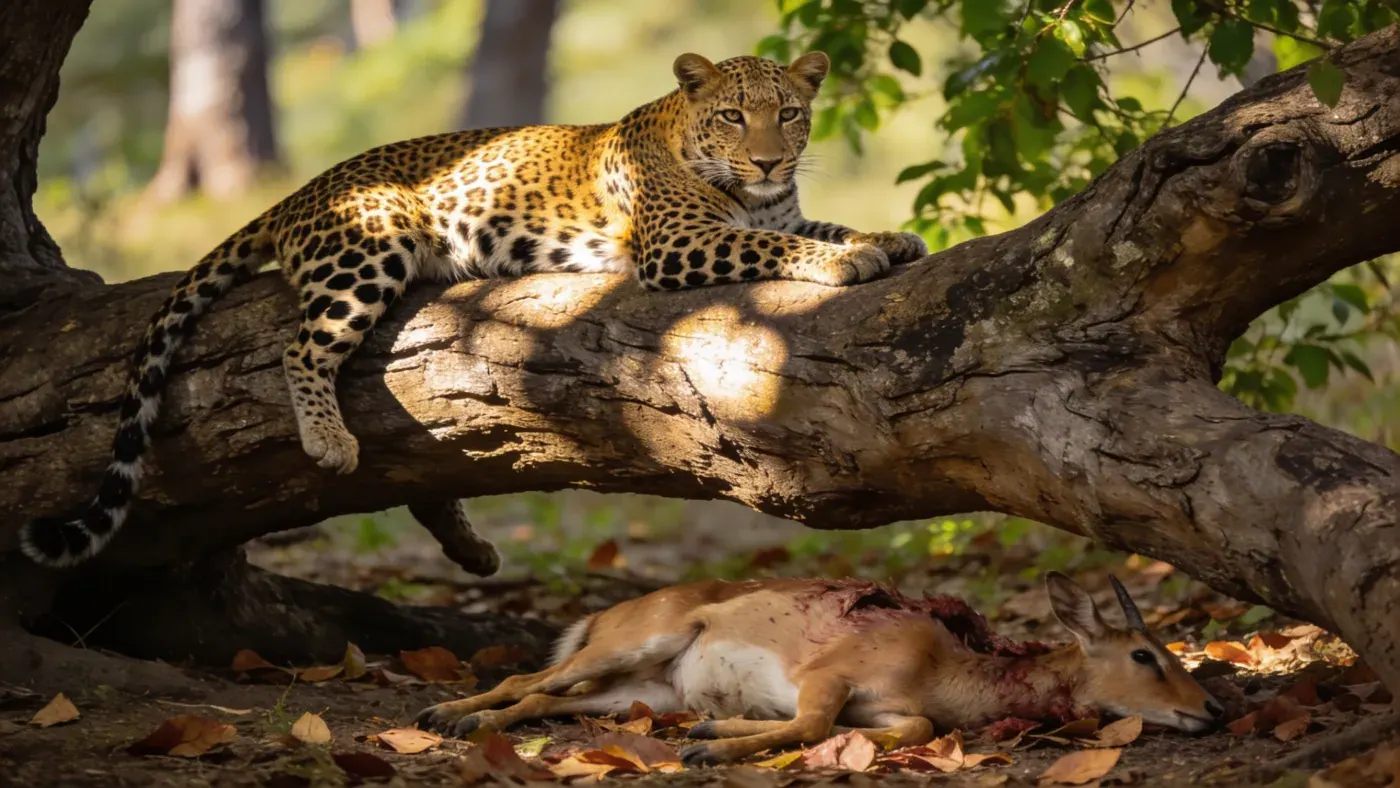
Leopards spend an unusual amount of time in trees for a cat their size, using branches as a daytime resting spot, a lookout, and — most distinctively — a larder. Few other predators routinely haul a kill off the ground, which makes the behaviour one of the leopard’s most recognisable field signs, often spotted before the cat itself.
Escaping the Competition
A leopard hunting on open ground shares that ground with lions, spotted hyenas and packs of wild dogs, all of which will steal a kill outright if they find it. Dragging a carcass into a tree removes it from all of them at once. The behaviour is most pronounced in regions with high lion and hyena density, and far less common where leopards face little competition for their kills.
The Physical Feat
Hauling a kill — sometimes an impala or young wildebeest weighing more than the leopard itself — up a trunk and along a branch requires exceptional upper body and jaw strength. The leopard grips the carcass by the neck or shoulder and climbs largely using its hind legs and a powerful lower back, an athletic feat few other cats could manage.
Choosing the Tree
Leopards favour trees with a strong horizontal fork some distance up, sturdy enough to bear the combined weight of cat and kill and inaccessible enough to deter a following lion. Certain trees are used repeatedly across years, evident from the accumulation of bones beneath them, and become a fixture of a leopard’s known territory.