A Different Genus
Despite the name, the snow leopard is not a true leopard and is sometimes placed in its own genus, Uncia uncia, rather than Panthera — though most modern classifications now include it within Panthera as Panthera uncia. It shares the family’s general build but diverges sharply in habitat, coat and behaviour, having specialised entirely for life in the high mountains of Central Asia.
Built for the Cold
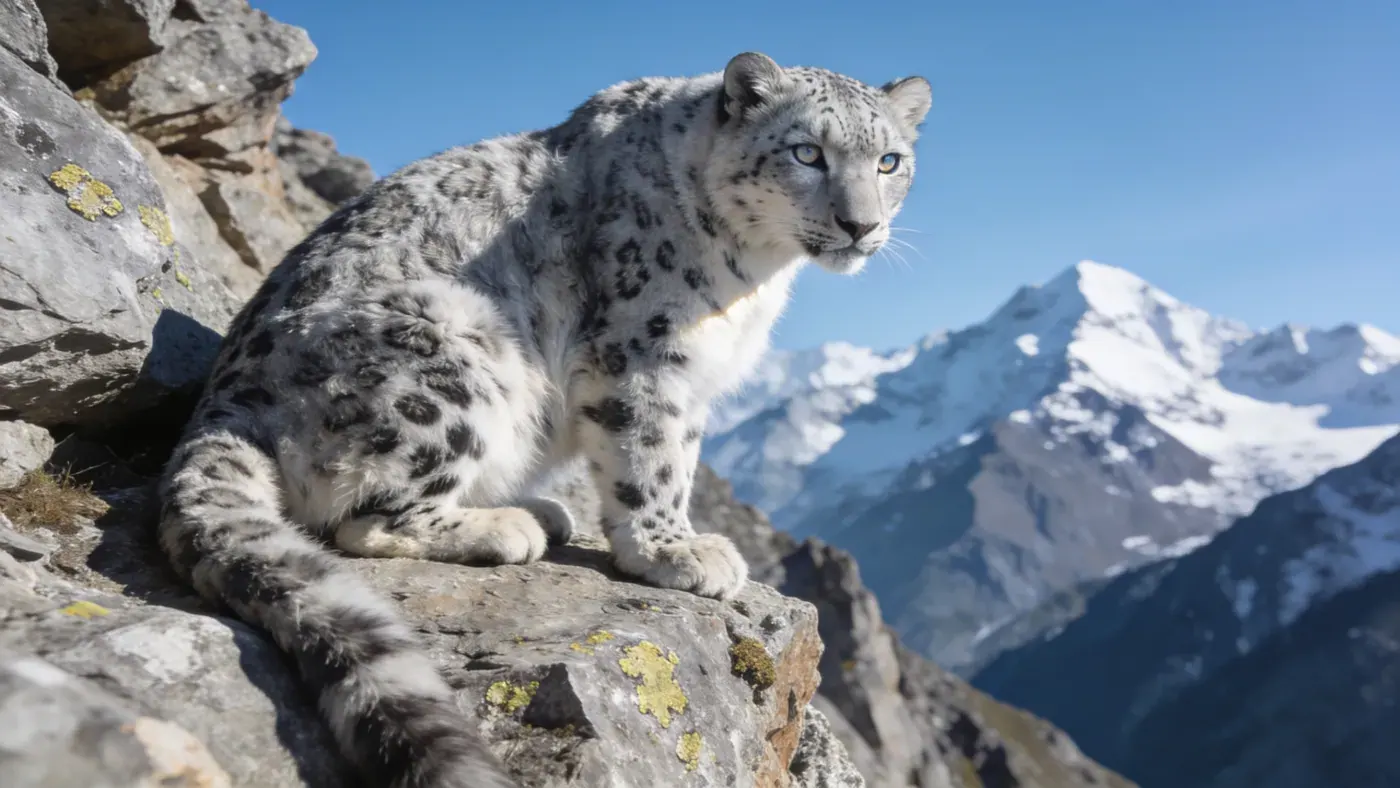
A snow leopard carries a thick, pale grey-white coat patterned with dark rosettes for camouflage against rock and snow, along with wide, fur-covered paws that work like snowshoes and an enormously long, thick tail — nearly as long as its body — used for balance on steep terrain and wrapped around the body like a scarf when resting.
Mountain Range
Snow leopards occupy the high mountain ranges of Central and South Asia — the Himalayas, the Tibetan Plateau, the Altai and the Tien Shan — typically between 3,000 and 4,500 metres elevation, moving lower in winter as prey follows the snowline down. It is one of the most difficult large cats to study, and much of what is known comes from camera traps and GPS collars rather than direct observation.
An Extraordinary Leaper
The snow leopard’s hind legs are unusually long relative to its body, letting it leap up to 50 feet in a single bound across mountain terrain — a critical adaptation for hunting blue sheep and ibex across steep, broken ground where a chase on foot is rarely possible.
A Vulnerable Population
Fewer than 10,000 snow leopards are estimated to remain in the wild, spread thinly across a dozen countries, and the species is listed as Vulnerable. Retaliatory killing after livestock loss, poaching for pelts and bones, and the decline of wild prey are the leading threats, and cross-border cooperation between range states is central to any recovery plan given how widely individual cats range.