Regulating Body Temperature Externally
As ectotherms, lizards cannot generate their own body heat internally and instead rely on their environment, absorbing warmth from the sun or warm surfaces to raise their body temperature to a functional level for hunting, digestion, and other activities.
Choosing the Best Basking Spots
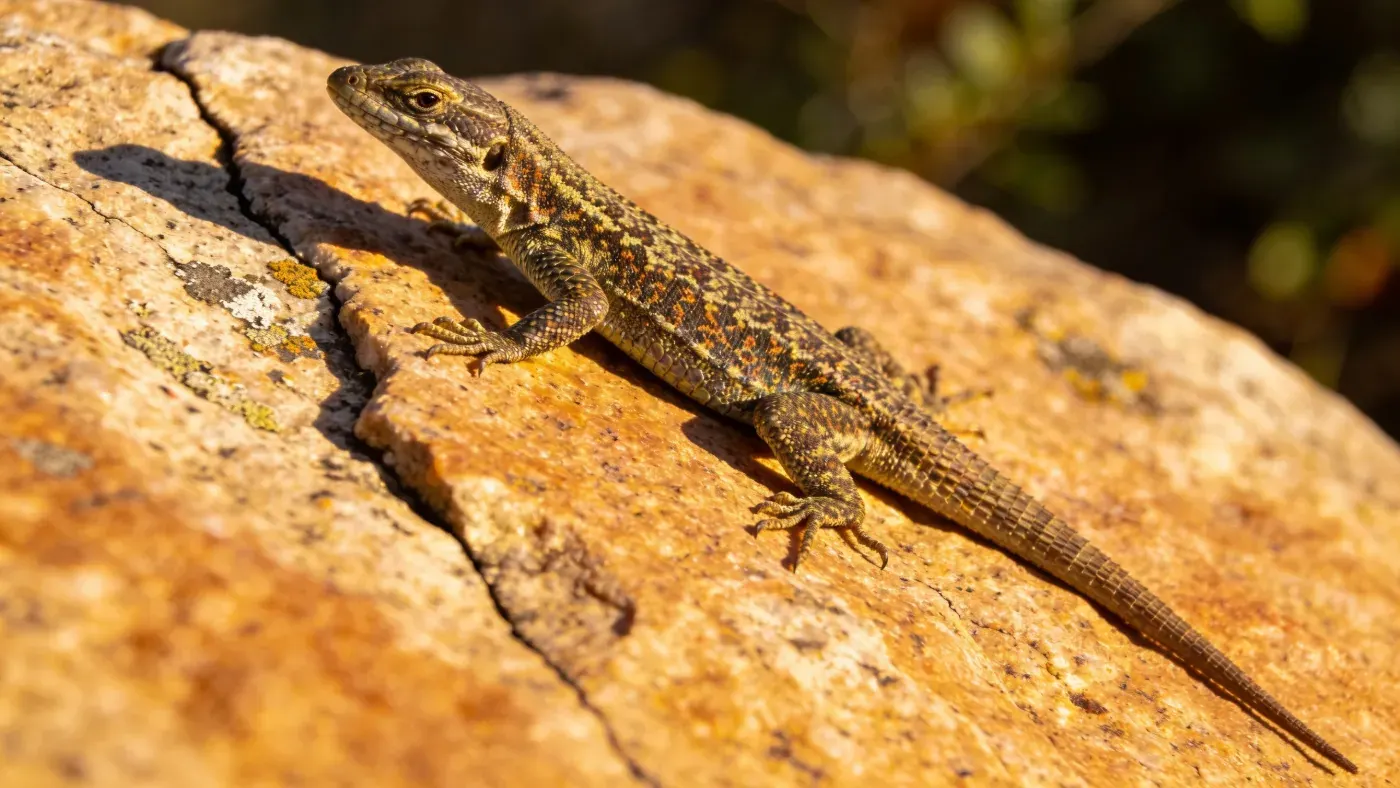
Lizards select basking sites carefully, often flat rocks or exposed branches that absorb and radiate heat efficiently, positioning their bodies broadside to the sun to maximize surface area exposed to warmth.
Moving Between Sun and Shade
Throughout the day, lizards move between sun and shade to maintain their body temperature within an optimal range, retreating to cooler cover if they become too hot and returning to bask if they cool down too much — a constant balancing act called behavioral thermoregulation.
Color Changes That Aid Heat Absorption
Some lizard species can darken their skin slightly when cold to absorb heat more efficiently and lighten it when warm to reflect excess heat, adding a physiological tool to their behavioral thermoregulation strategies.