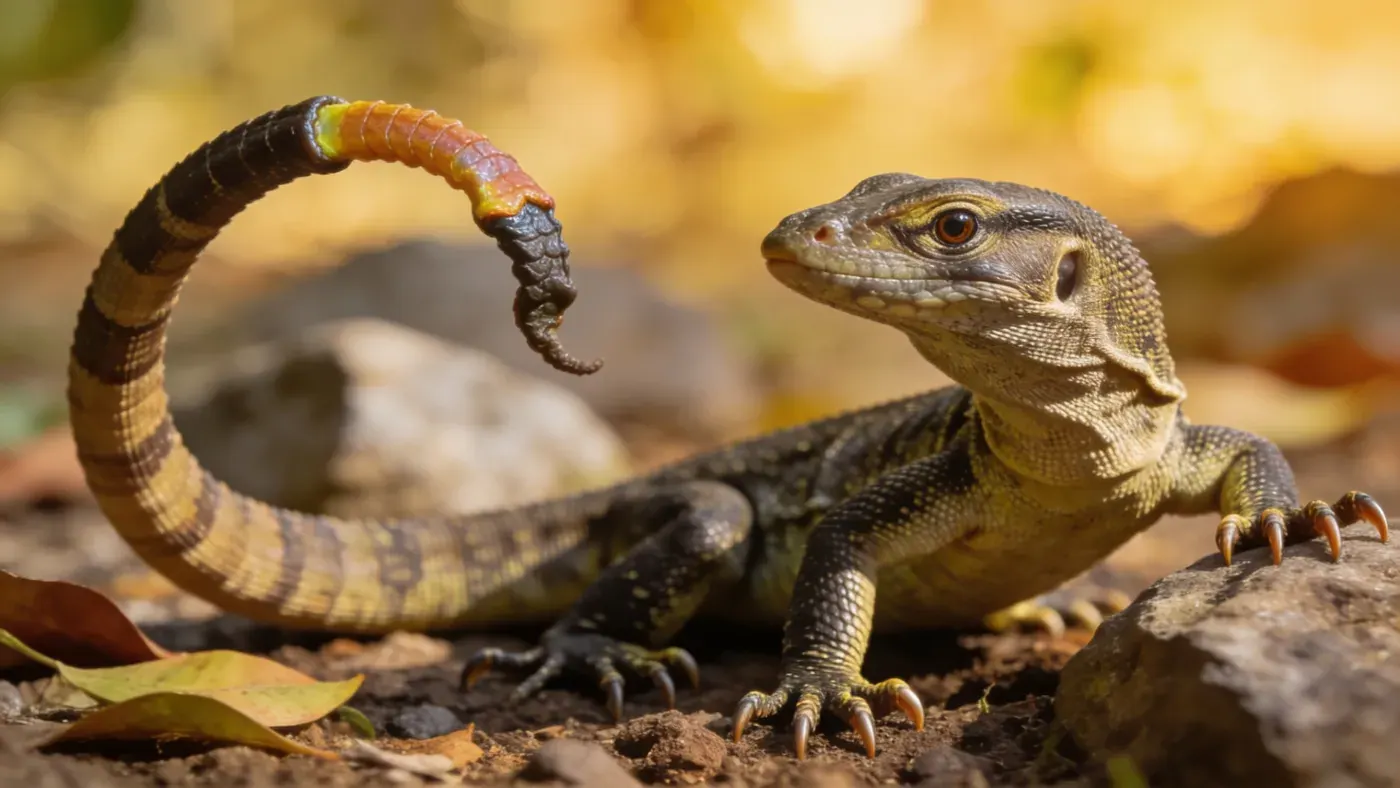
A Built-In Escape Mechanism
Many lizard species can voluntarily detach part of their tail when grabbed by a predator, a defense called autotomy, buying precious seconds to escape while the predator is distracted by the still-wriggling tail.
Fracture Points Built Into the Tail
Lizard tail vertebrae contain special fracture planes that let the tail break cleanly at specific points, with muscles around the break constricting blood vessels to prevent significant blood loss.
A Different Tail Grows Back
The regrown tail is usually shorter, and made of cartilage rather than the bony vertebrae found in the original — a functional but not identical replacement.
A Costly Trade-off
Regrowing a tail requires significant energy, and many lizards store fat reserves in their original tail, so losing it can leave the animal weaker and more vulnerable until the new one grows in.
A Model for Medical Research
Because few vertebrates can regenerate complex body parts, scientists study lizard tail regeneration for insight that could one day inform human tissue repair and regenerative medicine.