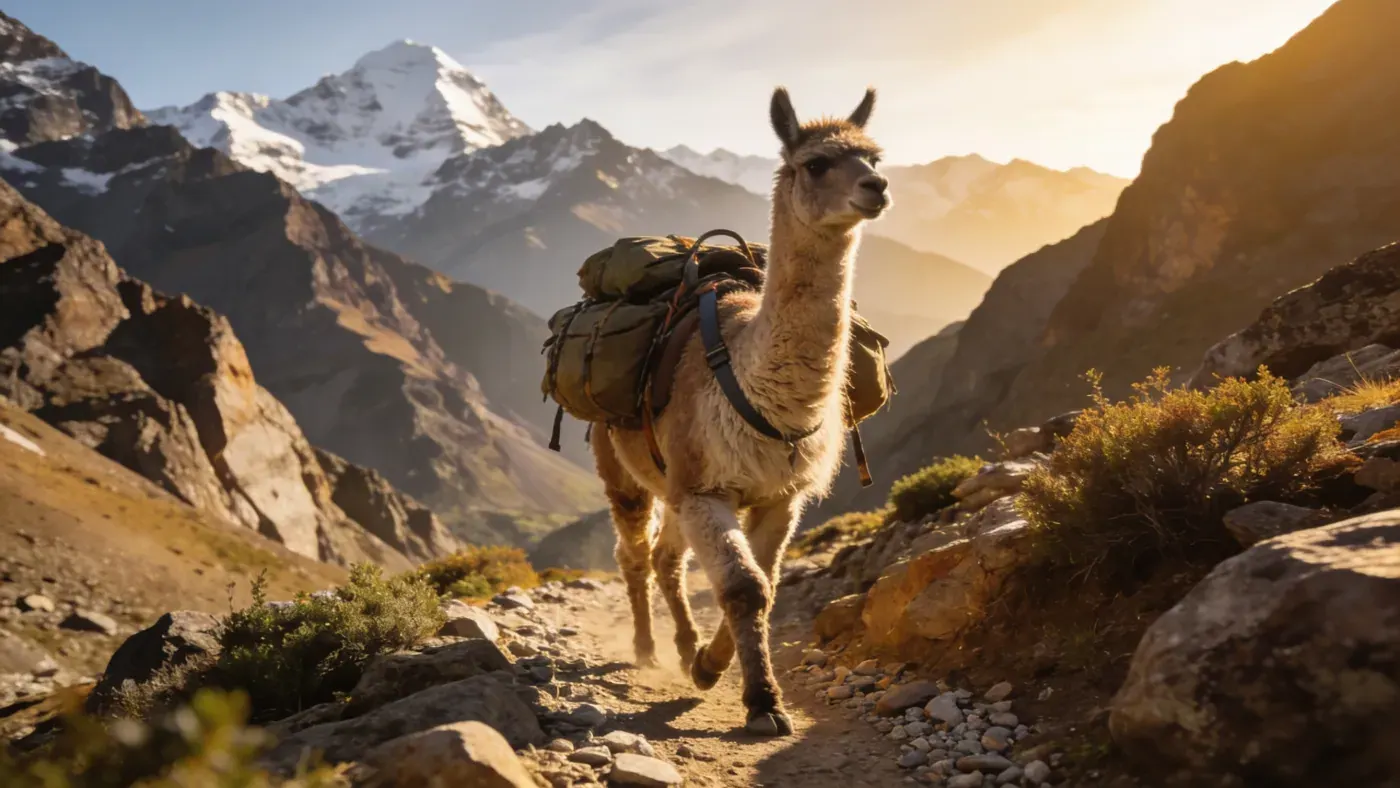
Built to Carry Loads at High Altitude
Llamas can carry loads of 25 to 30 percent of their body weight, typically 50 to 75 pounds, over long distances across steep, high-altitude Andean terrain, making them invaluable pack animals for Indigenous communities long before modern transportation existed.
Lungs and Blood Adapted for Thin Air
Llamas have specially adapted blood cells that allow them to absorb oxygen efficiently at high altitude, letting them work productively as pack animals at elevations exceeding 13,000 feet where oxygen levels are far lower than at sea level.
A Coarser Fiber Than the Alpaca's
While llamas are sheared for fiber less commonly than alpacas, their wool is still used to make rope, rugs, and coarse textiles. Llama fiber is generally thicker and less soft than alpaca fleece, reflecting the two species' different breeding priorities.
A Modern Role Beyond Traditional Uses
Today, llamas are also used outside the Andes as livestock guardians, protecting sheep and goats from predators like coyotes, and as therapy or companion animals due to their generally calm, curious temperament around people.