Resistant, Not Immune
Mongooses have a genuine biological edge against snake venom, but it is partial resistance rather than full immunity. A large enough dose of venom, or repeated bites, can still seriously harm or kill a mongoose — the animal's advantage comes from surviving smaller exposures, not from being invulnerable.
Modified Receptors Block the Toxin
Cobra and other elapid venoms attack by binding to acetylcholine receptors in nerve and muscle tissue, causing paralysis. Mongooses, like a handful of other venom-resistant animals, have evolved a slightly altered receptor shape that the toxin cannot bind to as effectively, blunting its paralytic effect.
Speed Matters More Than Toughness
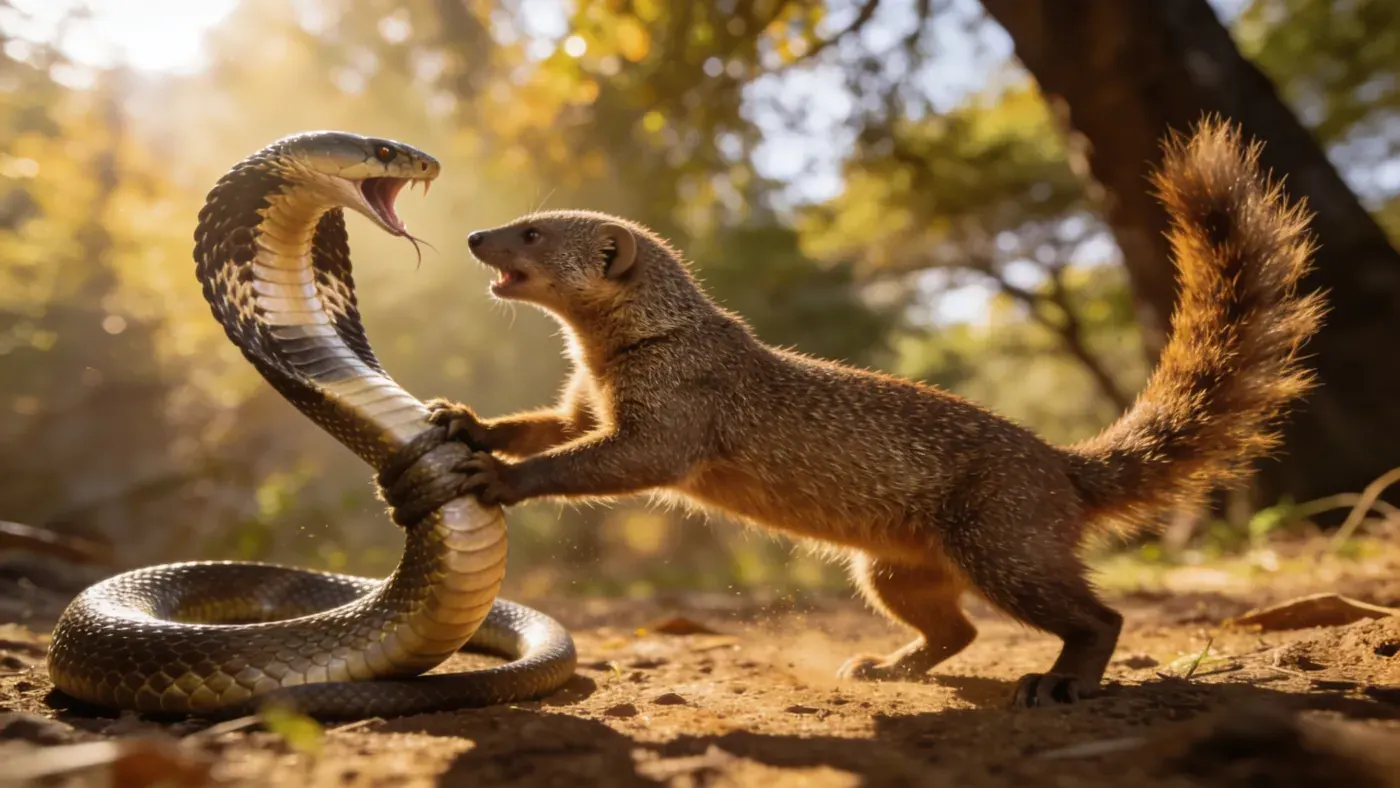
In an actual encounter, a mongoose relies far more on speed, agility, and thick, loose-fitting fur and skin than on its venom tolerance. It dodges strikes, harasses the snake into exhaustion, and looks for an opening to deliver a fast, fatal bite to the head or neck.
Fights Are Rare, Not Routine
Despite their reputation, mongooses do not regularly seek out venomous snakes to fight. Most confrontations happen only when a snake threatens a mongoose's burrow or young, or when a snake is encountered incidentally while foraging — avoidance, not combat, is the more common strategy.