A Varied, Fruit-Heavy Diet
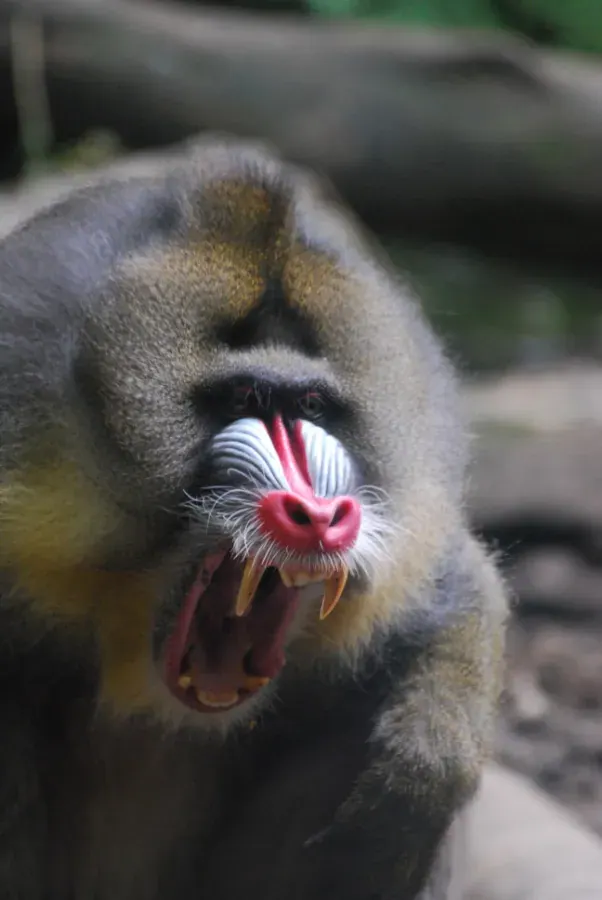
Mandrills are omnivores whose diet is roughly half fruit, rounded out with seeds, leaves, stems, bark, and flowers. Animal prey — mostly insects, snails, and scorpions, along with occasional eggs, birds, frogs, tortoises, and rats — makes up the rest. When the opportunity arises, mandrills will even take down small antelope, aided by canine teeth that can exceed 2.5 inches in length.
Massive Female-Led Hordes
Female mandrills and their young live in large groups called hordes, typically numbering in the hundreds — the largest horde ever accurately counted held more than 1,300 individuals. Male mandrills are largely solitary outside of this structure, joining hordes only during the three-month mating season.
Reproduction Favors Dominant Males
Mandrills breed once every two years, typically from June to October. While any male may attempt to mate, only dominant males tend to successfully sire offspring. Following a gestation period of roughly six months, births generally occur between January and May of the following year. Males take no part in raising young — that responsibility falls to the mother, sometimes with help from her female relatives.