Mammals · Primates
Monkeys
Simiiformes (infraorder, excluding apes)
Many Species Threatened
Monkeys are a large and diverse group of primates split into Old World monkeys (Africa and Asia) and New World monkeys (Central and South America), distinguished from apes by the presence of a tail in most species.
Classification
Kingdom: Animalia
Phylum: Chordata
Class: Mammalia
Order: Primates
Infraorder: Simiiformes
Size
Ranges enormously — from the pygmy marmoset at under 6 inches long to the mandrill, which can exceed 3 ft and 70 lbs.
Habitat
Rainforests, savannas, and mountains across Africa, Asia, and Central/South America.
Description
Most species have tails (unlike apes); Old World monkeys have narrow, downward-facing nostrils, New World monkeys wide, side-facing nostrils.
Diet
Omnivorous — fruit, leaves, insects, and small animals, varying widely by species.
Behavior
Highly social; most species live in troops with complex hierarchies and communicate through calls, gestures, and facial expressions.
Locomotion
Many New World species have prehensile tails used as a fifth limb for gripping branches.
Gestation
Roughly 5-7 months depending on species.
Life Span
15-30 years depending on species.
Did You Know?
Not all monkeys have prehensile (gripping) tails — this trait is found only in some New World monkey species, never in Old World monkeys.
Monkey in Foreign Languages
Frenchsinge
Spanishmono
GermanAffe
Italianscimmia
Portuguesemacaco
Swahilitumbili
Hindibandar
Japanesesaru
Chinese (Mandarin)hóuzi
Koreanwonsungi
Russianobez’yana
Greekpithēkos
Well-Known Monkey Species
Rhesus Macaque — Macaca mulatta
Vervet Monkey — Chlorocebus pygerythrus
Capuchin Monkey — Cebus (genus)
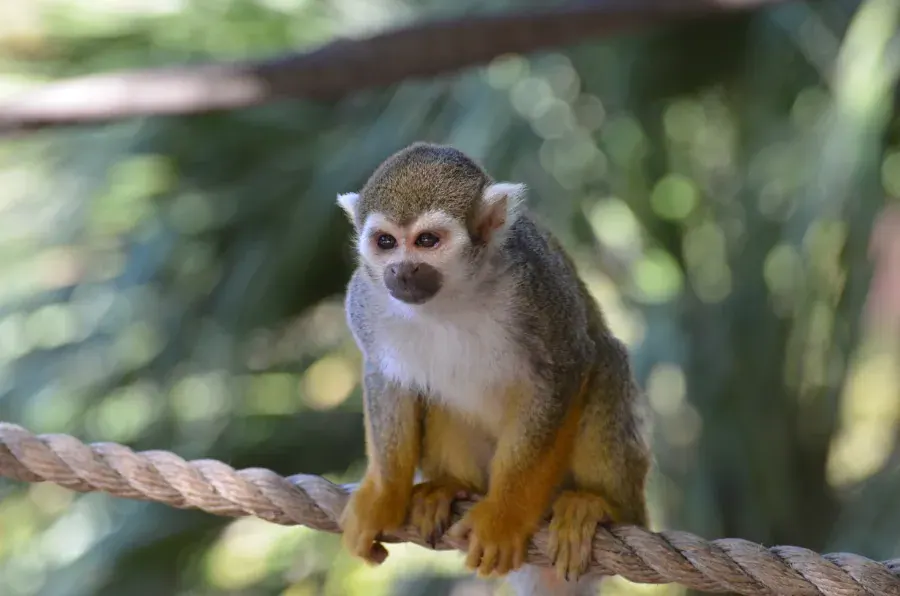
Squirrel Monkey — Saimiri (genus)
Mandrill — Mandrillus sphinx
Howler Monkey — Alouatta (genus)