Breeding Without a Strict Season
Unlike many antelope that breed only during a defined rut, nyala can mate throughout the year, though births tend to peak around the start of the rainy season when fresh forage is most abundant for nursing mothers.
A Seven-Month Pregnancy, One Calf at a Time
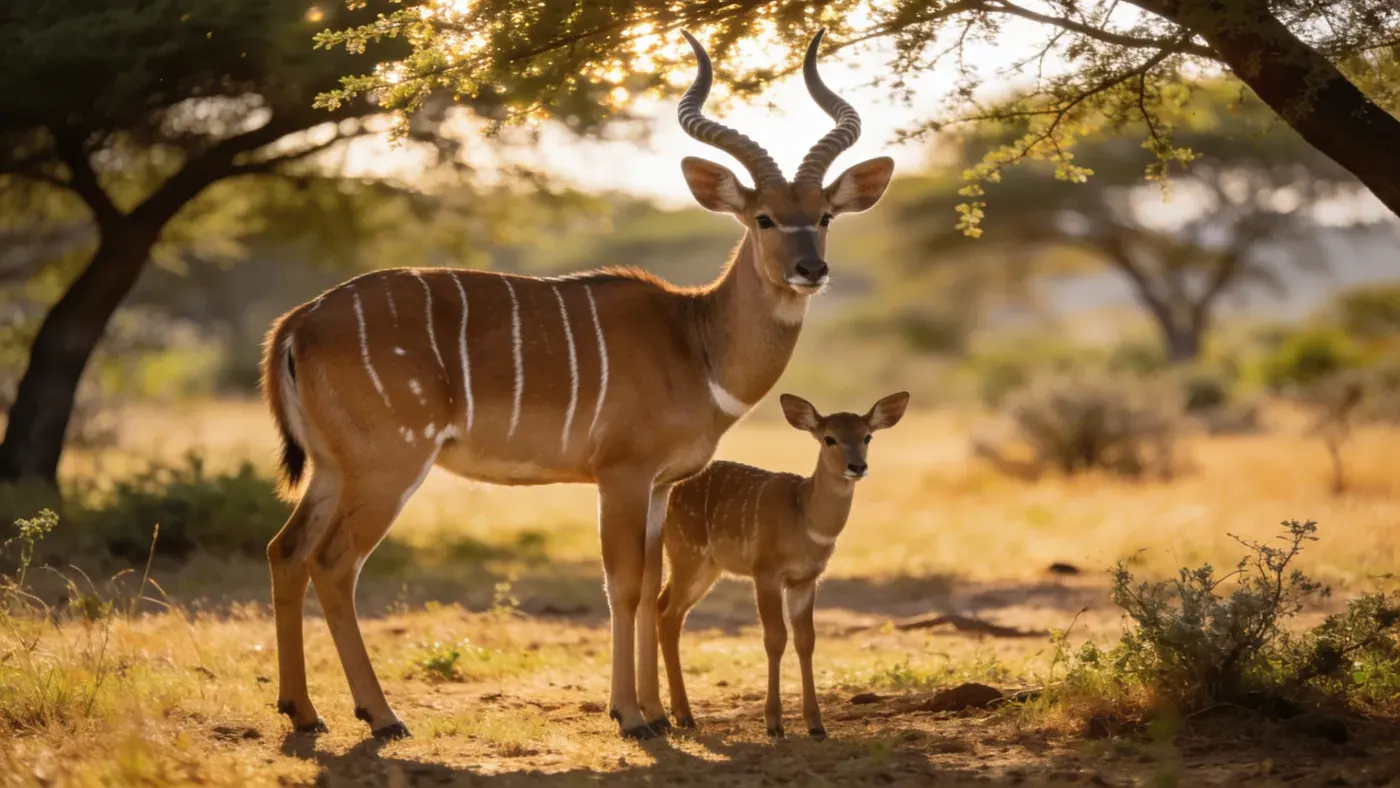
After a gestation of roughly seven months, a female nyala gives birth to a single calf. Twins are extremely rare, and the long pregnancy reflects a pattern typical of medium-to-large antelope species.
Hidden in the Thicket
Like many forest and thicket-dwelling antelope, nyala are "hiders": a newborn calf spends its first few weeks lying motionless and camouflaged in dense vegetation while its mother visits periodically to nurse, only gradually beginning to follow her and join the wider herd.
Growing Into Their Namesake Stripes
Young nyala of both sexes are born a similar reddish-brown color with faint white markings, and only gradually develop the striking coat differences between the sexes — males darkening toward slate-grey and growing spiral horns as they mature, while females keep their brighter chestnut coat into adulthood.