An Unfussy Omnivore
Opossums eat almost anything they can find, including insects, slugs, snails, worms, small rodents, amphibians, fruit, carrion, and — especially near people — garbage and pet food left outdoors. This flexibility is a major reason opossums thrive in such a wide range of habitats, from deep woods to city alleys.
The "Tick Vacuum" Claim
Opossums have earned a popular reputation as prolific tick-eaters, largely from a widely cited study suggesting a single opossum could consume thousands of ticks in a season through grooming. More recent research has questioned how large that effect really is in the wild, since it's unclear how many of those ticks opossums actually encounter and eat under natural conditions rather than in a lab setting.
Still a Useful Neighbor
Even with some of the "tick vacuum" enthusiasm walked back, opossums do eat a wide range of garden and yard pests, including slugs, snails, cockroaches, and beetles, alongside carrion that might otherwise attract less welcome scavengers. Their generally calm, non-aggressive temperament around humans also means they rarely cause the kind of property damage associated with more destructive backyard visitors.
Foraging at Night
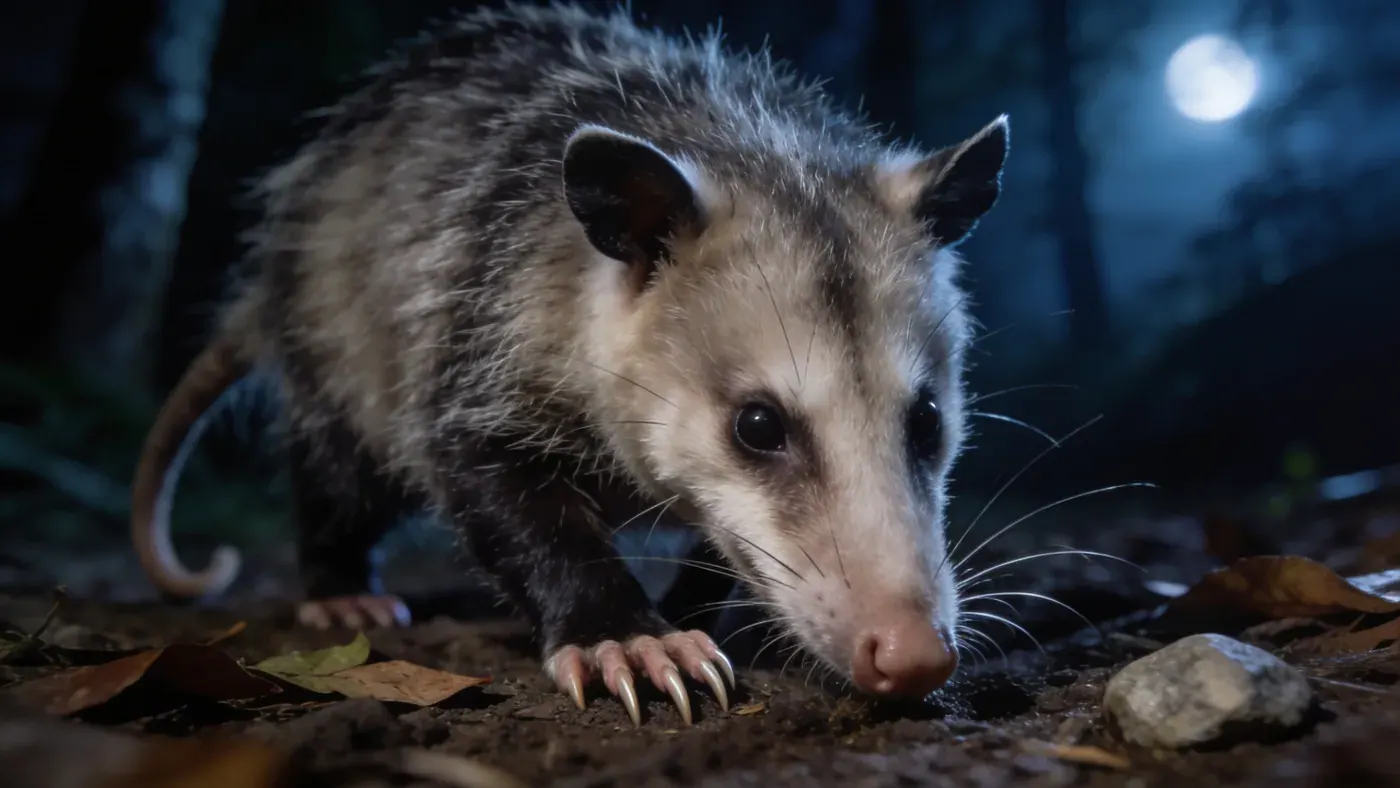
Opossums are almost entirely nocturnal, spending the day resting in a den — a hollow log, brush pile, or space under a building — before emerging after dark to forage over a home range that can shift from night to night. Because they rarely stay in one den for long, an opossum's foraging pattern tends to be nomadic and opportunistic rather than tied to a fixed routine.