Classification & Appearance
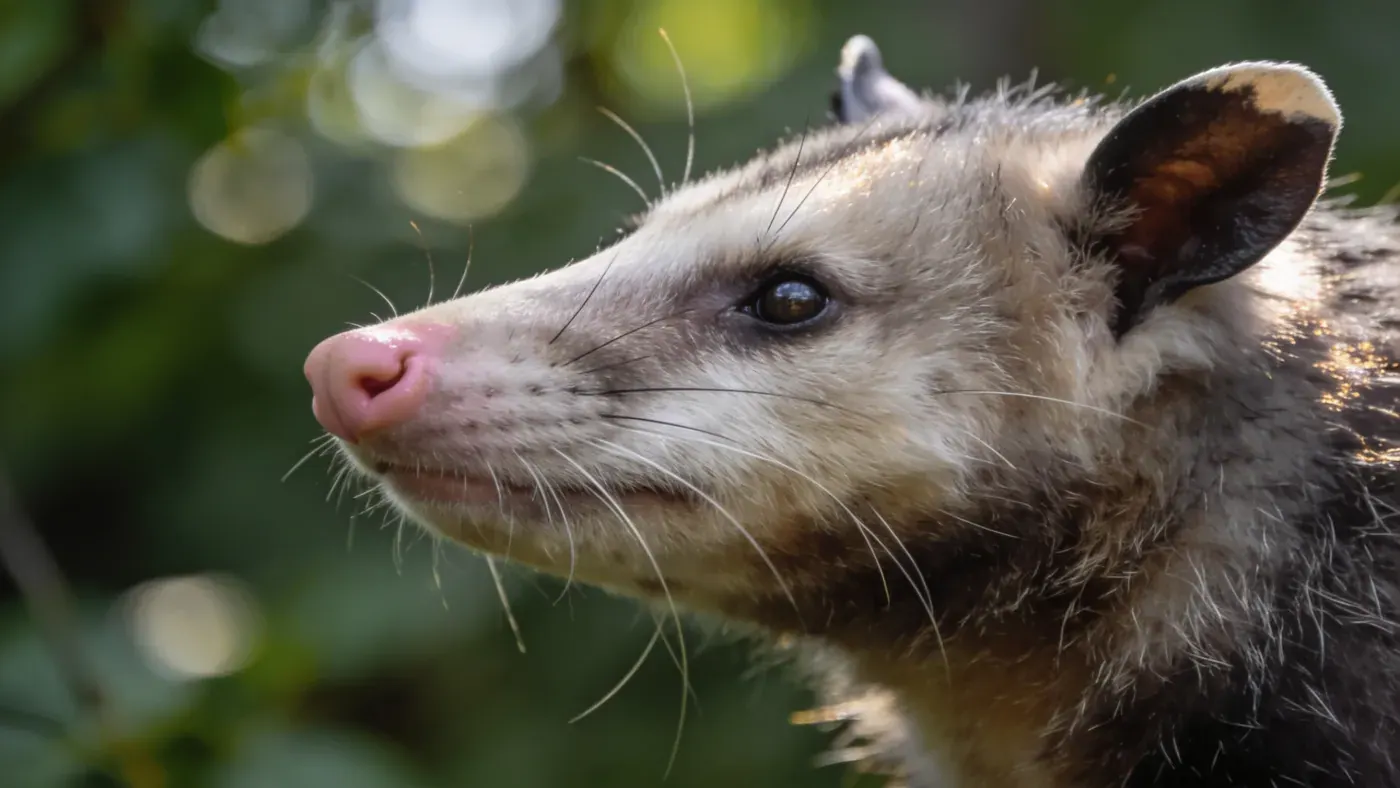
The Virginia opossum's scientific name is Didelphis virginiana, and it holds the distinction of being North America's only native marsupial — the same broad group of pouched mammals that includes kangaroos and koalas. It has coarse grayish-white fur, a long pointed snout, hairless black ears, and a naked, scaly, prehensile tail nearly as long as its body.
A Living Fossil
Opossums belong to an ancient lineage of marsupials that has changed relatively little over tens of millions of years, making them something of a living link to early mammal evolution. Their unusually high tooth count — 50 in total, more than any other North American land mammal — is one of several primitive traits retained from their distant ancestors.
A Grasping Tail and Hands
An opossum's tail is prehensile, capable of gripping branches to help with balance while climbing, though contrary to popular belief adults rarely hang from it for extended periods. Its hind feet also carry an opposable, thumb-like digit with no claw, giving the opossum an unusually strong grip for a mammal its size — useful for a life spent moving through trees, brush piles, and human structures alike.
Remarkably Resilient
Opossums have an unusually low body temperature for a mammal, which makes them poor hosts for the rabies virus and largely resistant to it — rabies in opossums is exceptionally rare compared to other mammals commonly found in North American backyards. They also show a notable degree of resistance to the venom of pit vipers such as rattlesnakes and copperheads, a trait researchers have studied for potential medical applications.