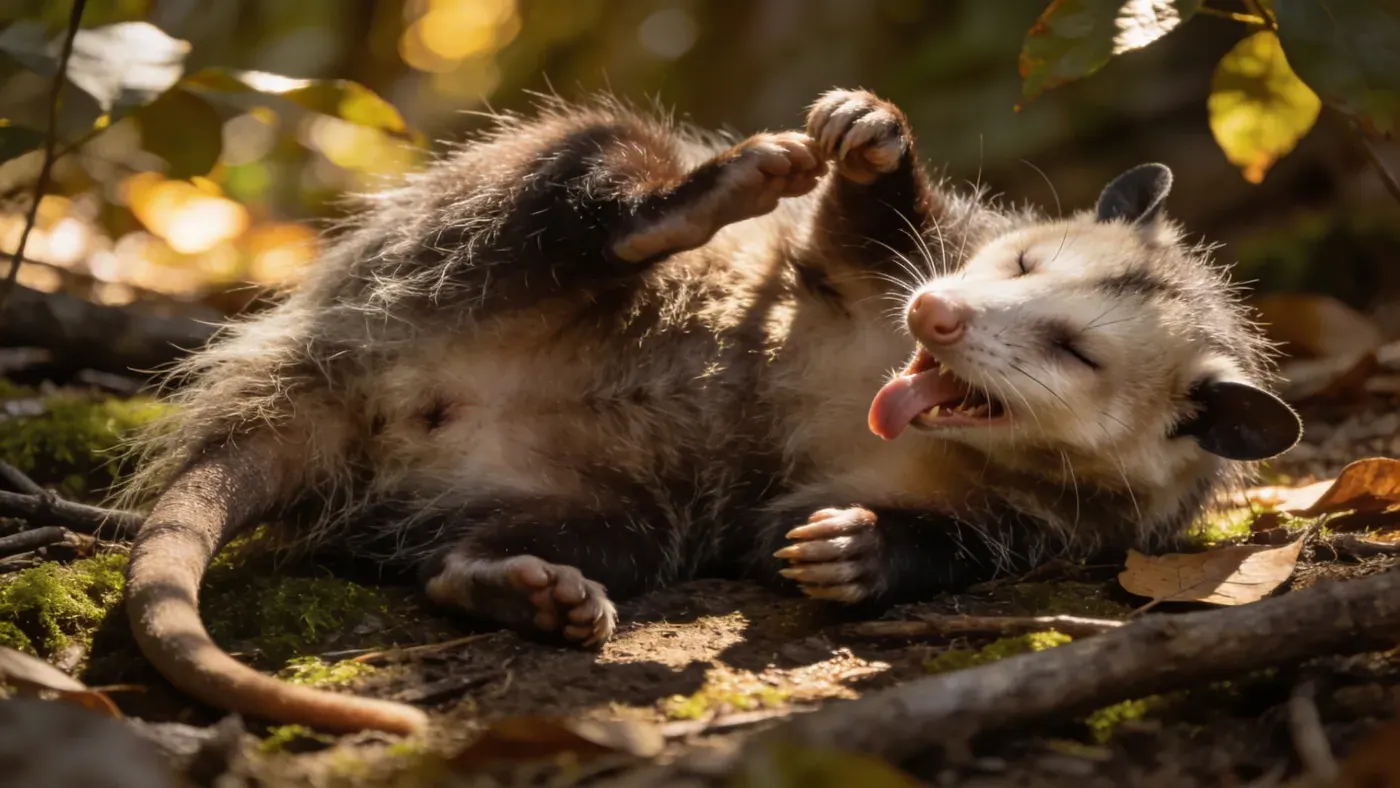
An Involuntary Response, Not an Act
Despite the phrase "playing possum" implying a conscious performance, an opossum's death-feigning response is an involuntary reflex triggered by extreme fear, similar in nature to fainting. The animal doesn't choose to fake death and cannot simply snap out of it on command — the episode runs its own course, typically lasting anywhere from a few minutes to several hours.
A Convincing Performance
During this state, an opossum's body goes rigid, its lips draw back into a fixed grimace, and it may drool or release a foul-smelling fluid from glands near the tail, mimicking the smell of a decaying carcass. Its heart rate and breathing slow dramatically, and it becomes largely unresponsive to touch — a combination convincing enough to deter many predators that prefer live prey and avoid carrion that already appears dead and diseased.
A Last-Resort Defense
Playing dead is typically an opossum's last line of defense, used only after other options — hissing, baring its 50 teeth, growling, or simply running or climbing away — have failed or aren't available. Because the response leaves the animal completely vulnerable, it's a genuine gamble that only pays off if it successfully convinces a predator to lose interest.
Waking Up Safely
Once the episode passes, an opossum typically regains awareness gradually, first twitching an ear or opening an eye before slowly returning to normal alertness and moving off. Because the animal can't be roused early even by careful handling, the best thing a person can do if they find a "playing possum" opossum is simply leave it alone in a quiet, safe spot until it recovers on its own.