Critically Endangered, All Three Species
All three orangutan species — Bornean, Sumatran and Tapanuli — are classified as Critically Endangered by the IUCN. Combined wild populations have fallen by more than half in the past 60 years, and the decline continues in most of their range.
Palm Oil and Deforestation
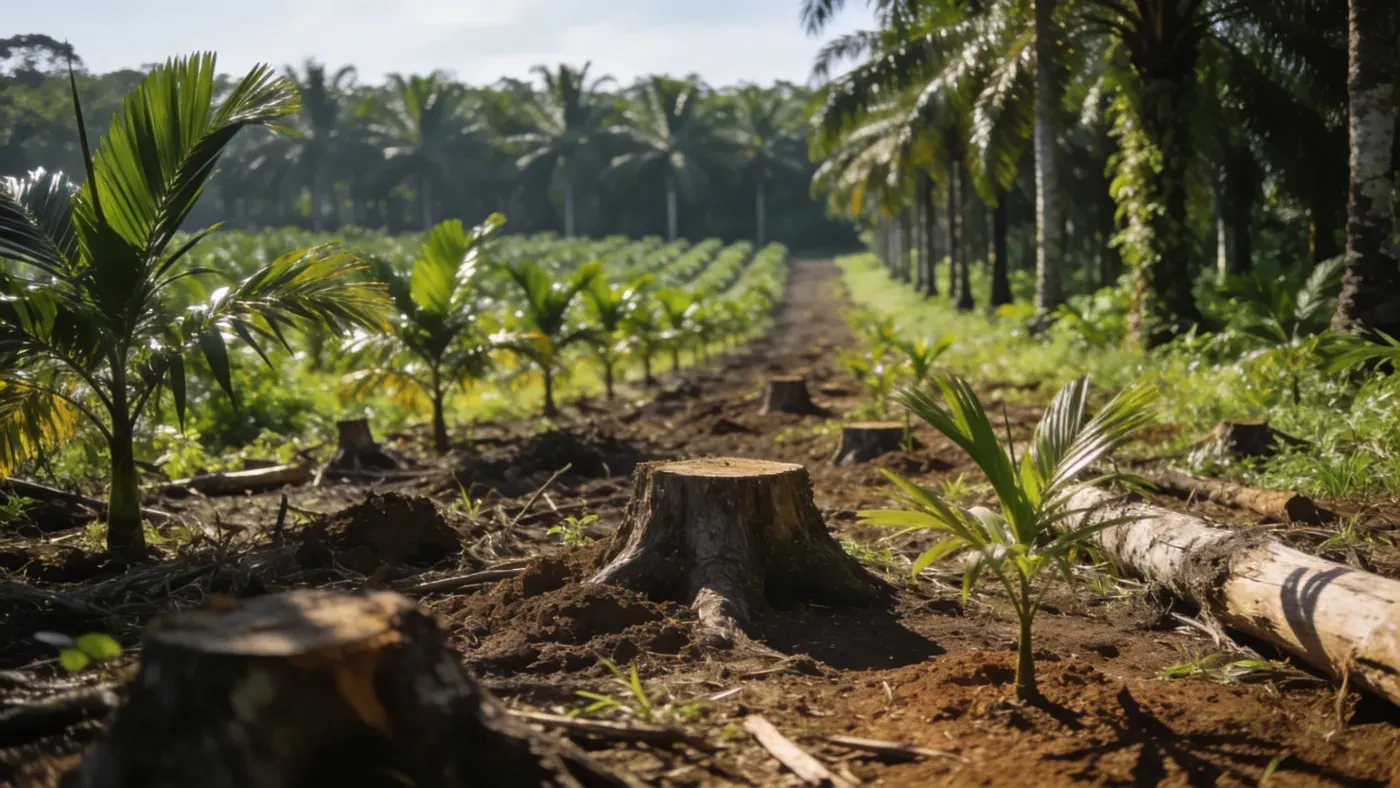
Large-scale conversion of rainforest to palm oil, pulpwood and rubber plantations is the leading driver of orangutan habitat loss. Borneo alone has lost roughly half of its forest cover since the 1970s, fragmenting populations into small, isolated pockets.
The Toll of Slow Reproduction
Because females give birth only once every 6 to 9 years, orangutan populations recover extremely slowly from losses. Even where habitat remains intact, populations reduced by poaching or conflict can take generations to rebound, if they recover at all.
Rescue, Rehabilitation and Reintroduction
Rehabilitation centers across Borneo and Sumatra care for orphaned and injured orangutans, teaching young rescues forest survival skills before eventual release. Certified sustainable palm oil and forest corridor projects aim to slow habitat loss and reconnect isolated populations.