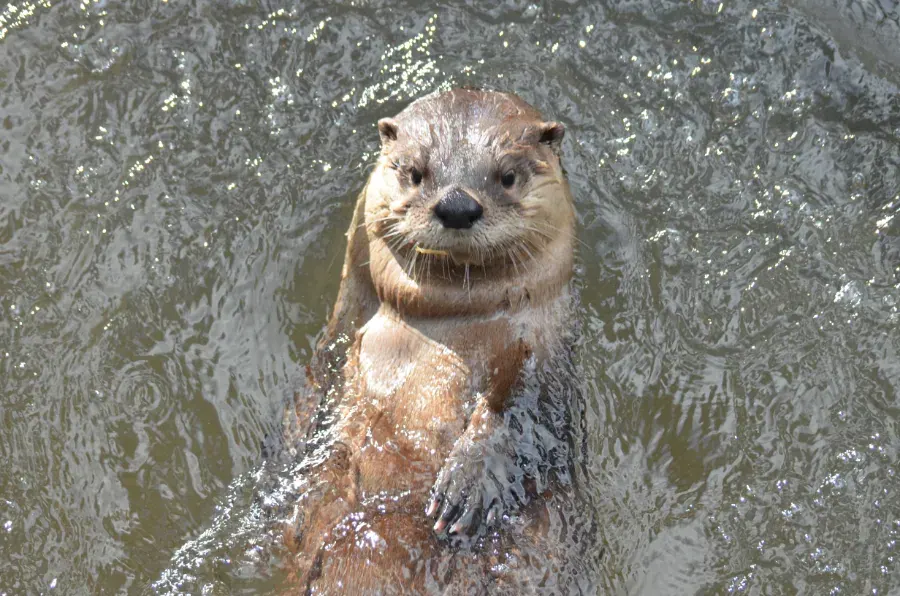
How river otters and sea otters differ.
Habitat
River otters: rivers, lakes, marshes, and coastal areas across most of North America. Sea otters: nearshore Pacific Ocean only, from California to Alaska, Russia and Japan.
Size
River otters: 20–30 lbs typically. Sea otters: 45–90 lbs, considerably larger and stockier.
Insulation
River otters: fur plus some body fat. Sea otters: almost no body fat, relying entirely on the densest fur of any mammal.
Time in water
River otters: spend significant time on land, denning in burrows. Sea otters: rarely come ashore, eating, sleeping and even giving birth at sea.
Tool use
River otters: rarely observed using tools. Sea otters: regularly use rocks to crack open shellfish, one of the few tool-using marine mammals.
Social structure
River otters: often found in family groups, playful and social. Sea otters: form single-sex rafts of dozens to hundreds, especially where food is abundant.
Conservation status
River otters: Least Concern, recovered across much of their range. Sea otters: Endangered, still recovering from historic fur-trade hunting.