A Bird of the Arctic Tundra
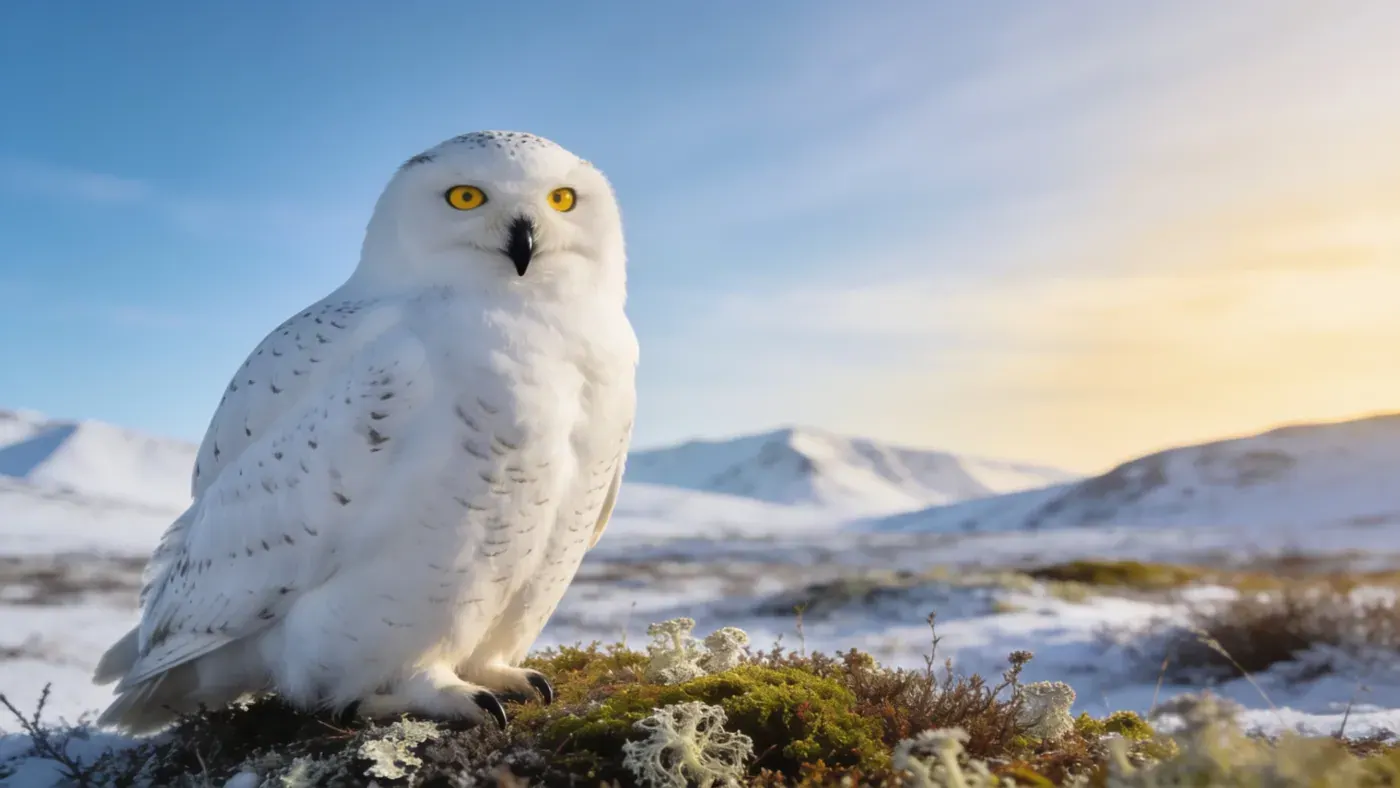
The snowy owl, Bubo scandiacus, breeds on the open, treeless tundra of the Arctic, ranging across northern North America, Europe and Asia, and is one of the few owl species active during daylight.
A Coat Built for the Cold
Dense feathering, including feathered feet and toes, insulates the snowy owl against Arctic temperatures that can drop far below freezing for months at a time.
Males Whiter Than Females
Adult male snowy owls are nearly pure white, while females and young owls carry dark barring across their plumage, providing better camouflage while nesting on the ground.
Following the Lemmings
Snowy owl breeding success is closely tied to lemming population cycles — in boom years, a single pair may raise far more chicks than in years when prey is scarce.
Occasional Southern Visitors
In some winters, called irruption years, snowy owls travel far south of their usual Arctic range in search of food, occasionally appearing in the northern United States and drawing crowds of birdwatchers.