A Bear, Not a Raccoon Relative
For decades scientists debated whether the giant panda belonged with bears or with raccoons, owing to some anatomical quirks it shares with the unrelated red panda. Genetic analysis has settled the question firmly: the giant panda is a true bear, part of the family Ursidae, while the red panda belongs to its own distinct family entirely — the two share a name and a bamboo diet but are not close relatives.
A False Thumb
A panda’s front paw has an enlarged wrist bone, the radial sesamoid, that functions as a sixth digit opposing the other five — a structure unique among bears that lets a panda grip a bamboo stalk with precision no other bear species can manage.
Black and White for a Reason
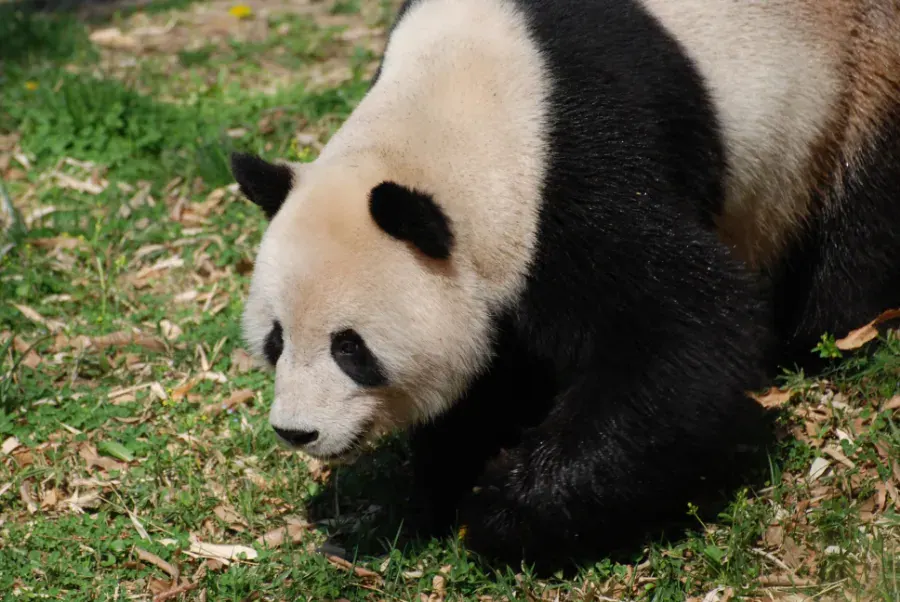
The panda’s bold coloring is thought to serve two functions: the dark patches around the eyes and ears may aid individual recognition and signal aggression at close range, while the overall high-contrast pattern likely provides camouflage in the dappled light and snow of its mountain forest habitat.
Solitary Except to Breed
Adult pandas are largely solitary, maintaining individual home ranges that they mark with scent, and coming together only briefly during a narrow springtime breeding window. Outside that window, encounters between adult pandas are uncommon and mostly avoided.
A Body Built for Almost Nothing but Eating
A wild panda spends 12 to 14 hours a day eating bamboo, moves comparatively little otherwise, and its low-energy lifestyle mirrors that of another bamboo specialist an ocean away — the koala — despite the two having no close evolutionary relationship.