Scent Over Sound
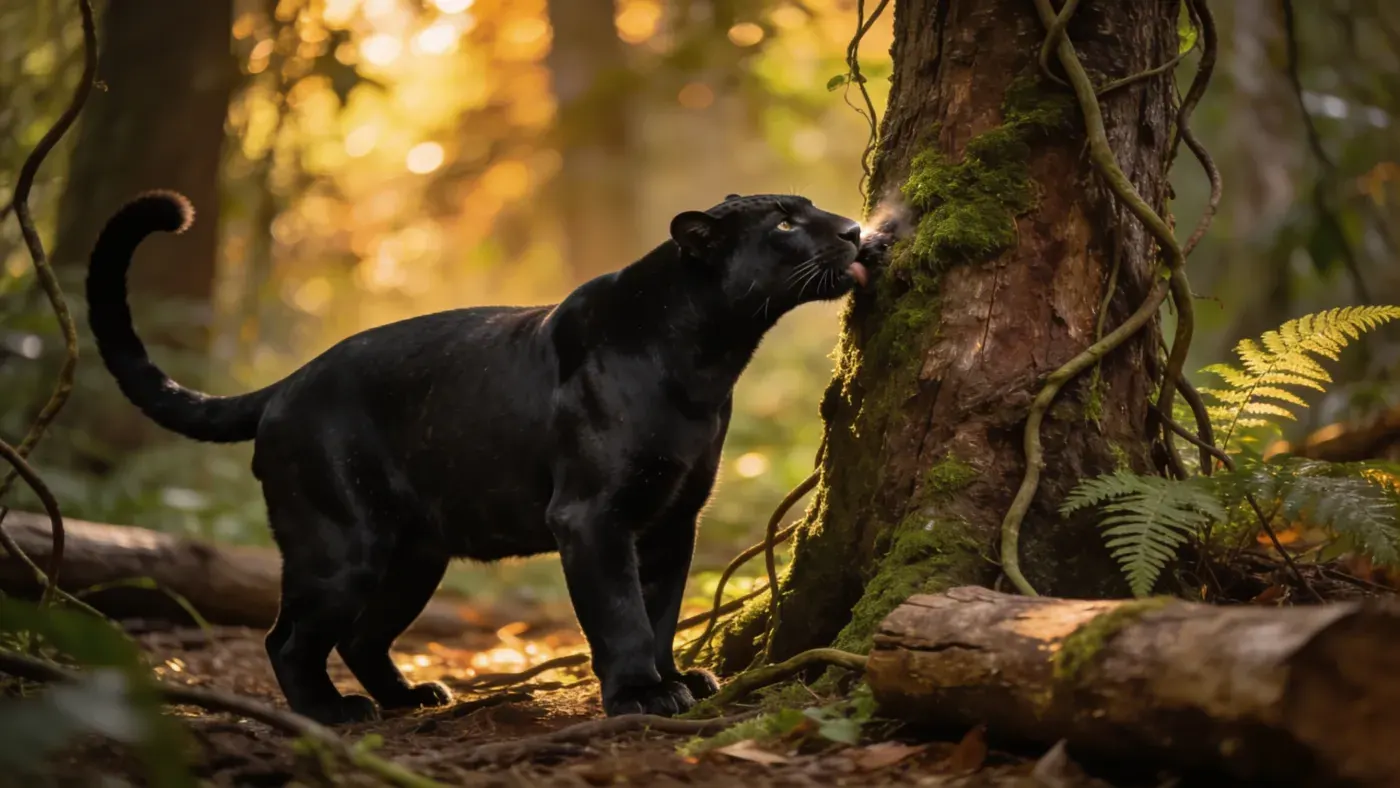
As solitary, territorial cats, panthers rely heavily on scent marking rather than vocal calls to communicate with one another across their large home ranges. Urine spraying, scat left in prominent spots, and claw marks on trees all serve as long-lasting messages about territory boundaries and reproductive status.
A Voice Mostly Reserved for Close Range
Panthers can chuff, growl, hiss, and — in the case of jaguars and cougars, the two species most often called "black panther" or "panther" in the Americas — make deep, resonant calls, but these vocalizations are typically used at close range, during mating encounters, or when defending territory from an intruder.
Exceptional Night Vision
Like all big cats, panthers have a reflective layer behind the retina called the tapetum lucidum that bounces light back through the eye a second time, dramatically improving night vision — a critical adaptation for animals that do most of their hunting at dusk, dawn, and after dark.
Whiskers and Sensitive Paws
Long facial whiskers help a panther judge distances and navigate dense vegetation in low light, while highly sensitive paw pads let it move almost silently across the forest floor, a stealth advantage essential to an ambush predator that relies on getting close before its prey notices.