Wings That Became Flippers
Over millions of years, penguin wings evolved from flight tools into rigid, paddle-like flippers with dense, fused bones — a structure that sacrifices the ability to fly through air entirely in exchange for exceptional propulsion through water.
Essentially Flying Underwater
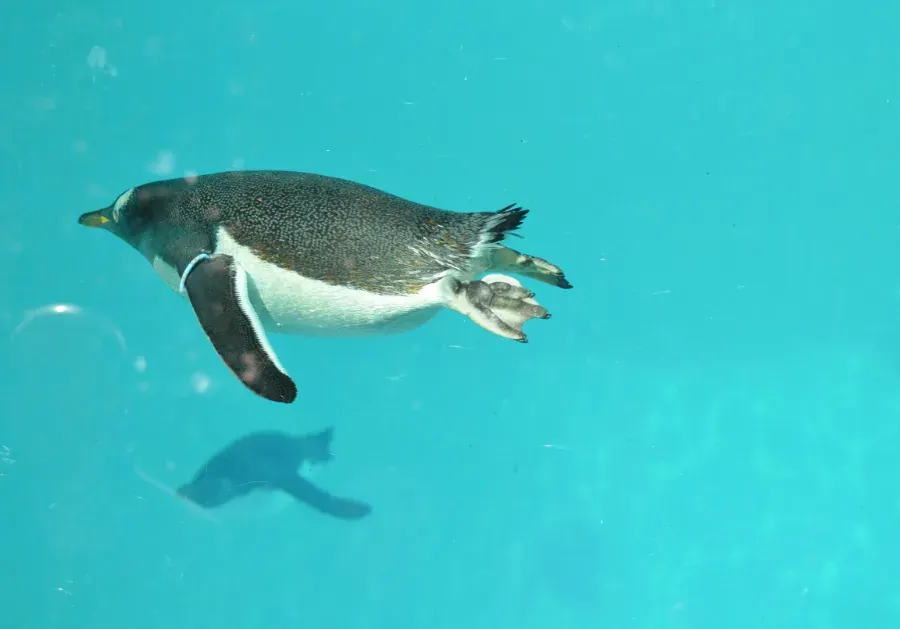
Penguins swim using the same basic flapping motion a flying bird uses in the air, effectively "flying" through water instead. This lets species like the gentoo penguin reach underwater speeds of over 20 miles per hour, faster than any other bird swims.
A Body Built to Cut Through Water
A penguin's smooth, torpedo-shaped body minimizes drag, while dense bones — unlike the light, air-filled bones of flying birds — help it sink and stay submerged rather than float uselessly at the surface, an adaptation shared with several other diving birds and marine mammals.
Feathers That Seal Out Cold Water
Penguins have the densest feathers of any bird, packed at up to about 100 feathers per square inch, layered over a thick coat of insulating down and waterproofed with oil from a gland near the tail — together forming a seal that keeps frigid water away from the skin entirely.