Mammals · Felines
Puma
Puma concolor
Data Insufficient
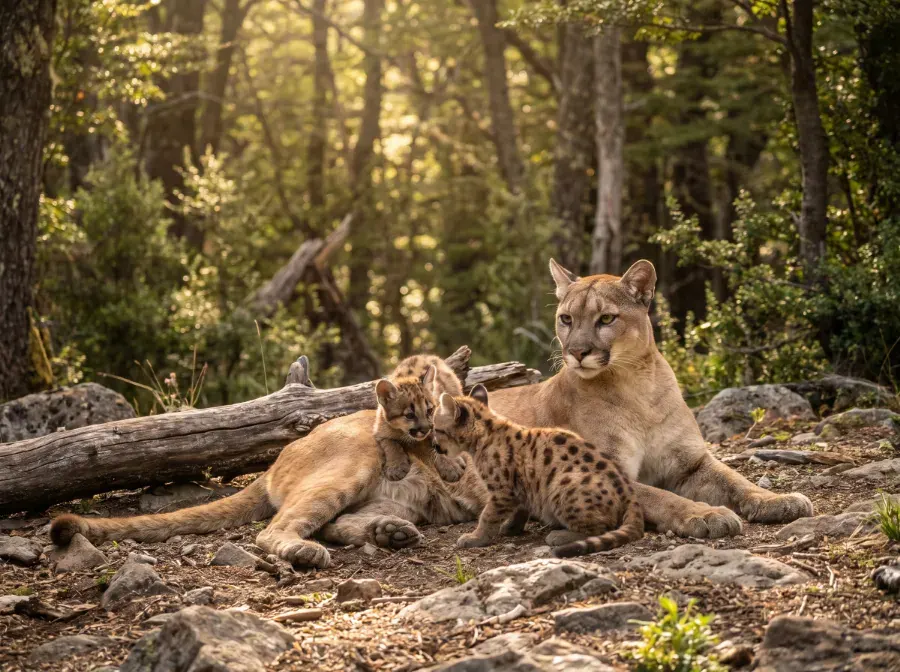
The puma is a large wild cat native to the Americas, also known as the cougar, mountain lion, panther, and catamount. Pumas are powerfully built, with large paws and sharp retractable claws, and inhabit coniferous and tropical forests, swamps, and grasslands.
Classification
Kingdom: Animalia
Phylum: Chordata
Class: Mammalia
Order: Carnivora
Family: Felidae
Genus: Puma
Other Names: Cougar, Mountain Lion, Panther, Catamount
Related species: Jaguarundi — same genus, Puma
Size
2–2.3 feet at the shoulder and 3.5–5.5 feet long; 100–180 lbs, with males larger than females.
Habitat
Native to the Americas, from the Canadian Yukon to the southern Andes, in coniferous and tropical forests, swamps, and grasslands.
Description
Powerfully built, with large paws and sharp, retractable claws.
Behavior
Most active at dawn and dusk, sheltering in dense vegetation, caves, or rocky crevices during the day.
Diet
Deer, moose, and elk, along with smaller prey like mice, squirrels, porcupines, raccoons, rabbits, and beavers.
Gestation
82 to 96 days.
Birth
Litters of 2 to 4 kittens; a newborn kitten weighs 8 to 15 ounces.
Sexually Mature
Around 3 years of age.
Life Span
12 years in the wild; up to 25 years in captivity.
Social Structure
Solitary, except during breeding.
Athleticism
Can leap up to 20 feet in a single jump and run up to 30 miles per hour.
Did You Know?
The puma lacks a flexible hyoid bone and cannot roar.
Did You Know?
The puma has the largest range of any wild land animal in the Americas.
Puma in Foreign Languages
Frenchpuma
GermanPuma
Spanishpuma
Dutchpoema
Italianpuma
Portuguesepuma
Swahilipuma
Finnishpuuma