Breeding Without a Fixed Season
Pumas can breed at any time of year, though births tend to cluster somewhat depending on regional prey availability. Males and females come together only briefly to mate before going their separate ways.
A Roughly Three-Month Pregnancy
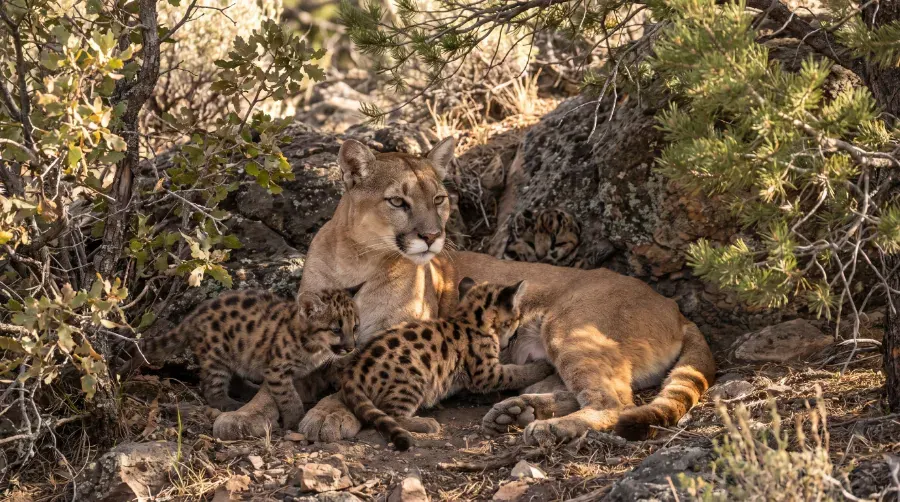
Gestation lasts about 90 days, after which a female typically gives birth to one to six kittens, most commonly two or three, in a den site such as a rock crevice, dense thicket, or hollow log.
Spotted Coats That Fade With Age
Puma kittens are born with dark spots and rings on their tail that provide camouflage in dappled forest light, gradually fading to the solid tan coat of an adult by around six months to a year of age.
A Long Apprenticeship With Mom
Kittens remain with their mother for around one to two years, gradually learning to stalk and kill prey under her supervision before dispersing to find and establish a territory of their own — a critical, often risky period as young pumas cross unfamiliar and sometimes already-claimed ground.