A Long History of Puzzle Studies
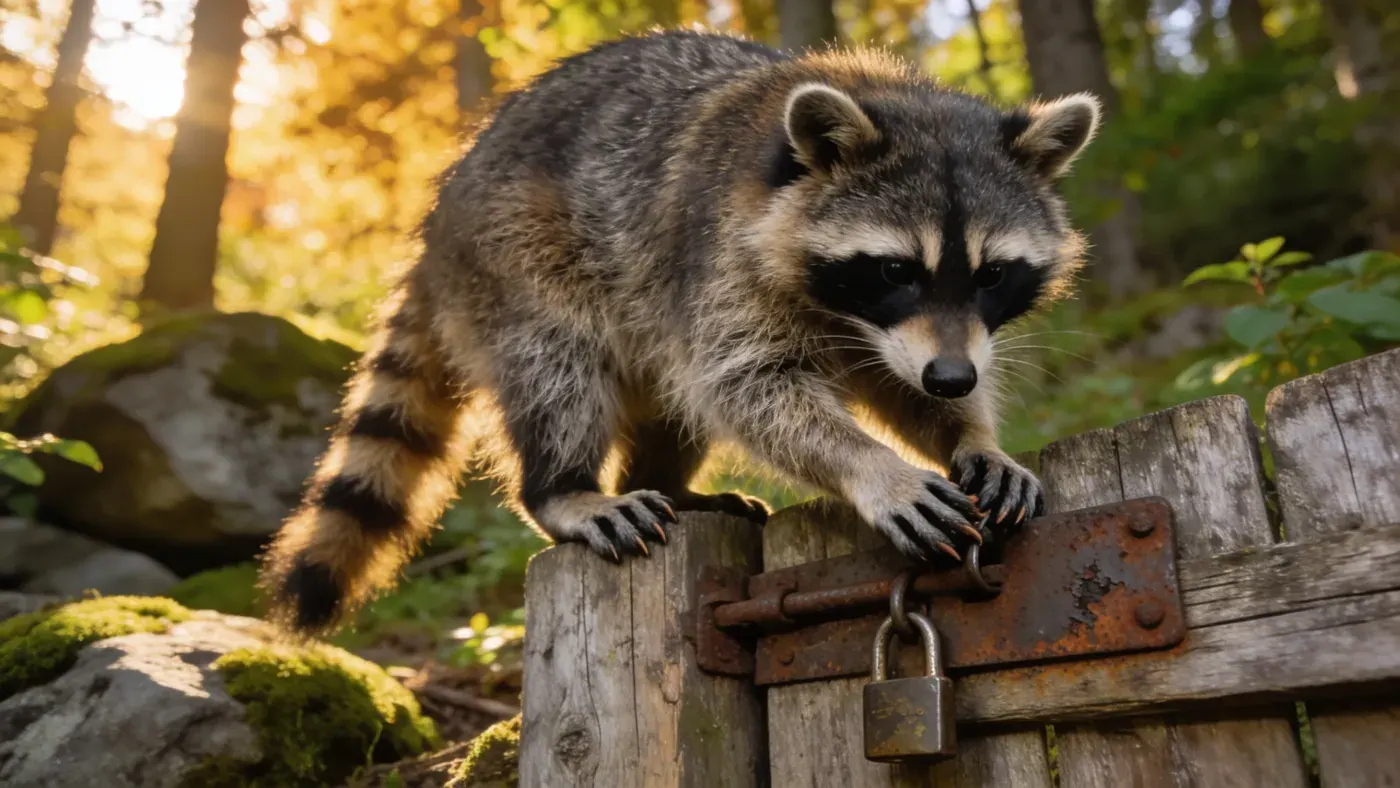
Raccoons have been the subject of animal cognition research since the early twentieth century, when psychologist H.B. Davis documented raccoons solving complex, multi-step locks in a fraction of the trials needed by many other mammals tested at the time — findings that helped establish the species’ reputation for unusual problem-solving ability.
Genuinely Long Memory
Follow-up studies have found raccoons can remember the solution to a task for up to three years without practice, one of the longer documented problem-solving memory spans recorded in a non-primate mammal, suggesting real long-term retention rather than simple habituation.
Learning by Watching
Raccoons have demonstrated the ability to learn a task by observing another raccoon perform it, a form of social learning documented in relatively few mammal species and generally associated with higher cognitive flexibility.
Adaptable Problem-Solving, Not Just Memorized Tricks
Rather than relying on a single fixed strategy, raccoons tested with novel obstacles frequently try multiple approaches in sequence until one succeeds — behavior researchers interpret as genuine problem-solving rather than simple trial-and-error repetition of a memorized solution.
Intelligence That Complicates Coexistence
The same cognitive flexibility that makes raccoons compelling research subjects also makes them notoriously difficult to exclude from secured garbage, gardens and structures — conventional deterrents that work on less adaptable animals often fail against a raccoon willing and able to try several different approaches to the same obstacle.