More Sensitive Than a Human’s Fingertips
A raccoon’s front paws contain an extraordinary concentration of touch receptors — roughly four to five times as many as its hind feet — and nearly two-thirds of the brain’s sensory processing area is devoted to interpreting signals from those paws, a proportion of neural real estate rivaling that of primates for touch sensitivity.
Five Long, Dexterous Digits
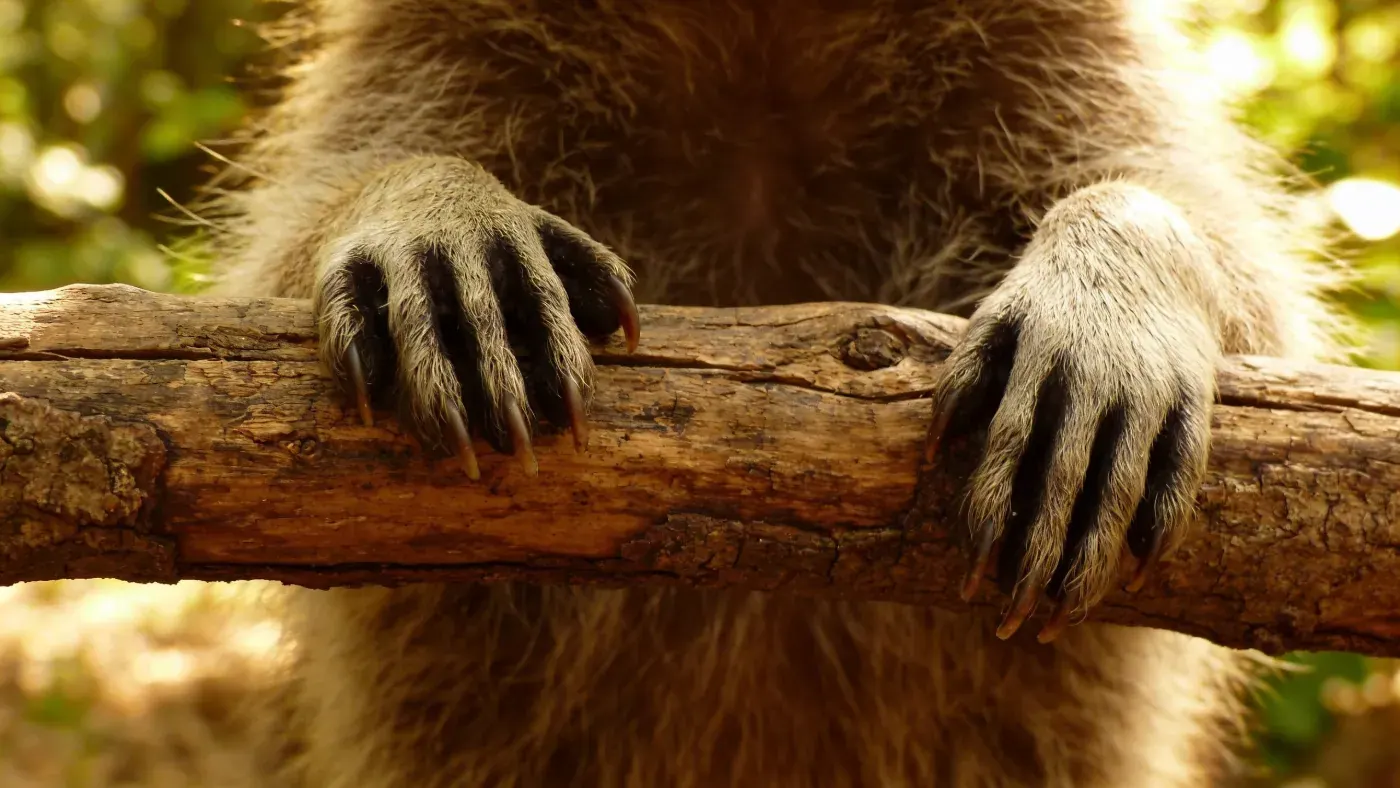
Unlike most mammals, a raccoon’s front paws have five long, flexible fingers capable of grasping and manipulating objects with real precision — opening latches, unscrewing lids, and untying simple knots are all documented behaviors, which is part of why raccoons are notoriously difficult to keep out of secured garbage containers.
Touch Compensates for Underwater Vision
Raccoons frequently forage in streams and shallow water for crayfish, frogs and mussels, feeling along the bottom with their sensitive front paws rather than relying on sight — their vision underwater is poor, but their sense of touch through the paws is precise enough to locate and identify prey by feel alone.
The "Washing" Behavior, Reconsidered
The popular belief that raccoons wash their food before eating has been reconsidered by researchers, who note captive raccoons dunk food in water even when it is already clean. The current leading explanation is that wetting the paws temporarily enhances their already acute tactile sensitivity, making it easier to examine food for edibility, rather than any actual cleaning function.
Fine Motor Control Rivaling Some Primates
Studies comparing raccoon paw dexterity to that of primates have found genuinely comparable fine motor control for certain manipulative tasks — an unusual level of manual skill for a mammal without opposable thumbs, achieved instead through exceptional finger independence and touch sensitivity.