A Defensive Tool, Not an Attack Weapon
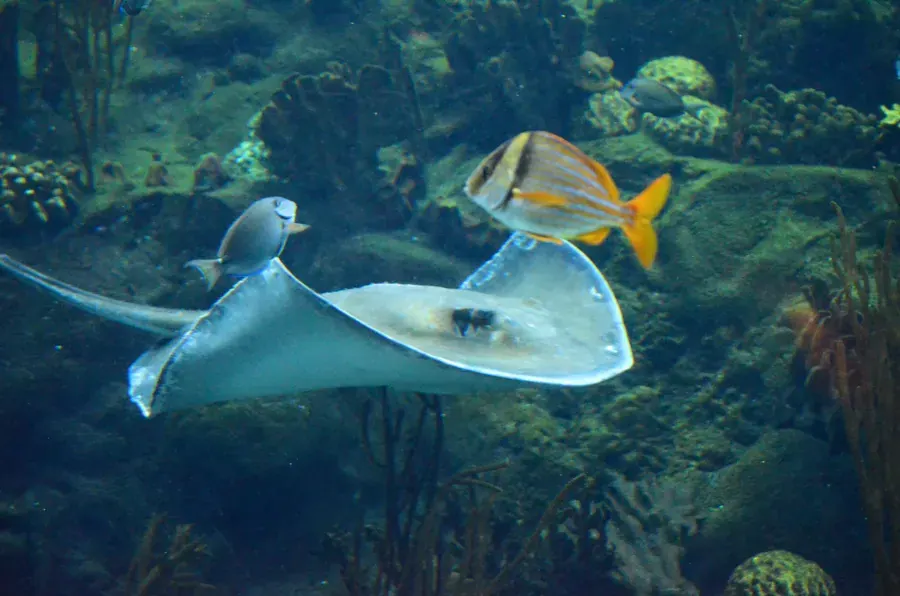
The barbed, venomous spine near a stingray’s tail is used purely in self-defense when the animal feels threatened or is accidentally stepped on, not as a hunting tool against prey.
How the Sting Happens
When threatened, a stingray whips its tail upward, and the serrated barb can puncture skin and release venom that causes intense pain and swelling, though stings are rarely life-threatening to humans when treated promptly.
Avoiding Stings
Most stingray encounters and stings happen when someone steps on a ray buried in sand without noticing it — shuffling feet along the sandy bottom in ray habitat, sometimes called the "stingray shuffle," gives the animal time to swim away before contact.