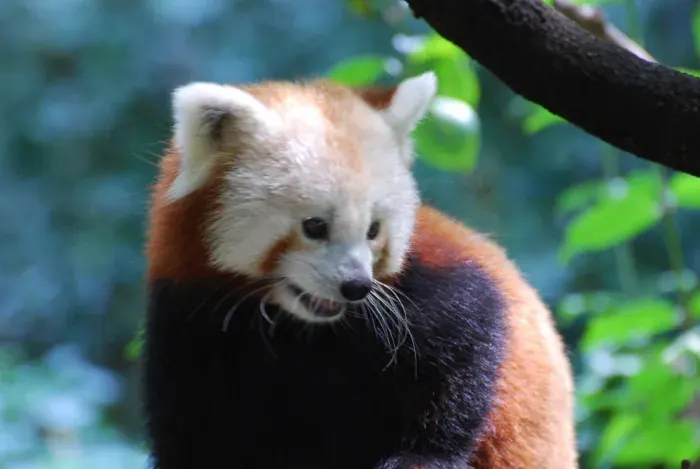
An Endangered Species
The IUCN lists the red panda as Endangered, estimating that fewer than 10,000 mature individuals remain in the wild, with the population trend continuing downward. Because red pandas are shy, solitary, and spread thinly across remote mountain forest, getting precise counts is difficult — but every regional survey in recent decades has pointed the same direction: fewer animals, in less connected habitat.
Habitat Loss and Fragmentation
Logging, livestock grazing, and the conversion of forest to farmland have steadily eaten into the narrow elevation band red pandas depend on. Because their range was already patchy before human pressure, even modest additional habitat loss can sever the corridors connecting one population to the next — leaving small, isolated groups more vulnerable to inbreeding and local extinction.
Poaching and the Illegal Fur Trade
Red pandas are hunted for their thick, richly colored fur, historically used in local hats and clothing and still trafficked internationally in some regions. Snares set for other animals, such as musk deer, also injure or kill red pandas as unintended bycatch, adding pressure on top of targeted poaching.
Conservation Efforts
Red pandas are protected by national law across their range countries and listed under CITES Appendix I, banning international commercial trade. Community-based forest patrol programs in Nepal and India work directly with local herders to reduce snaring and illegal logging, while breeding programs at accredited zoos worldwide maintain a genetically diverse safety-net population and fund field research and habitat protection.