Keratin, Not Bone
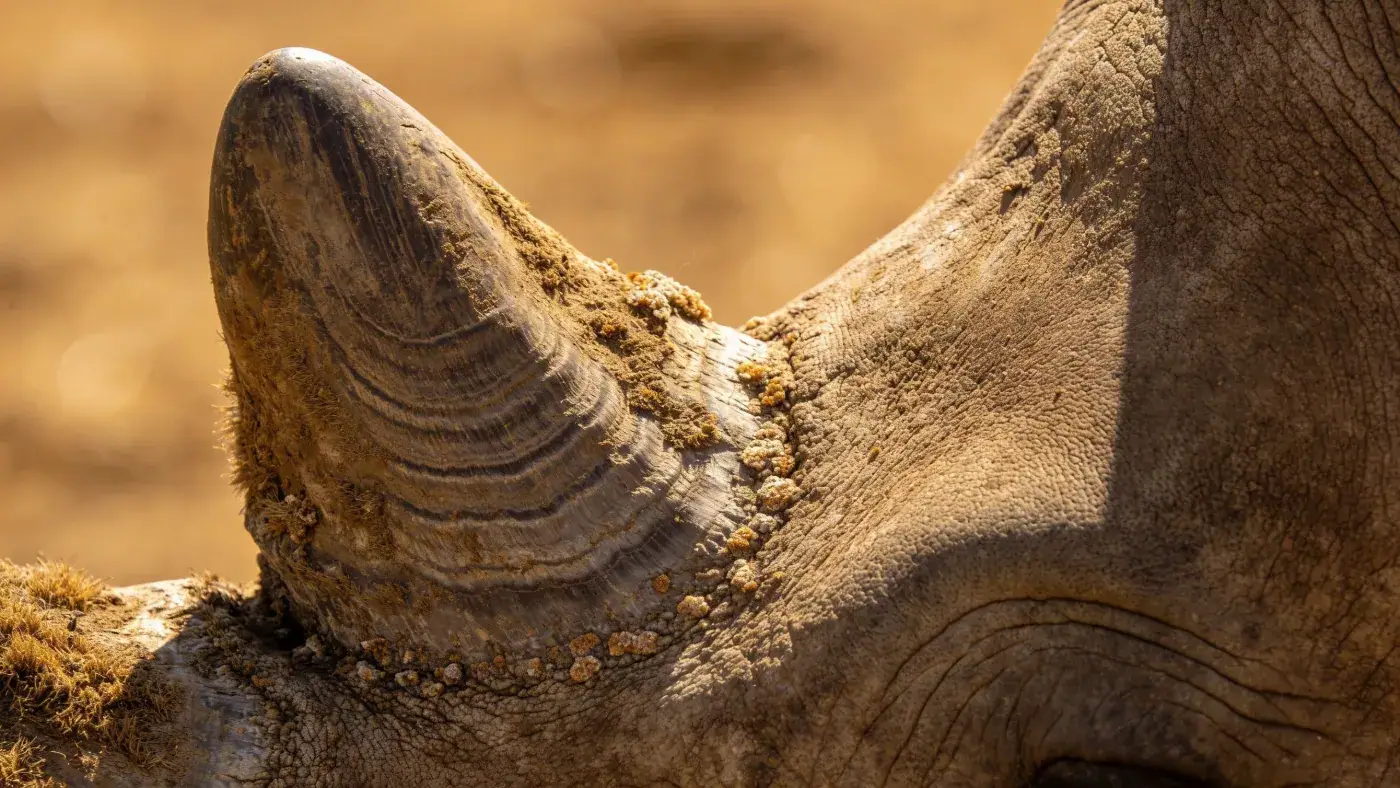
A rhino horn is not bone, antler or ivory. It is made almost entirely of keratin, the same fibrous protein that makes up human hair and fingernails, and grows continuously from the skin throughout the animal’s life in the same way a fingernail does — meaning a horn removed without harming the animal will eventually regrow.
No Proven Medicinal Value
Rhino horn has been used in traditional medicine, chiefly in parts of East and Southeast Asia, on the belief that it treats fevers and other ailments. Chemical analysis finds it is composed of keratin and a small amount of calcium and melanin — no compound with any demonstrated medicinal effect beyond what a fingernail clipping would provide. Every controlled study to test the claim has failed to find a therapeutic effect.
A Status Symbol Drives the Real Demand
Beyond traditional medicine, a growing share of demand — particularly in Vietnam — is driven by rhino horn’s use as a luxury status symbol, carved into jewelry or given as an expensive gift, closer in function to ivory or exotic leather than to any medical product.
Why Dehorning Is Controversial
Because the horn regrows, some reserves periodically dehorn live rhinos under sedation as an anti-poaching measure, on the reasoning that a hornless rhino is not worth killing. The practice is contested: dehorning can affect a rhino’s ability to defend territory and calves, and poachers in some areas kill dehorned animals anyway for the small stump that remains.