Genuinely Poor Eyesight
Rhinos have notably weak vision and can struggle to clearly make out a stationary object more than about 30 feet away, a real vulnerability for an animal that relies mainly on bulk and horn rather than speed for defense.
Ears That Swivel Independently
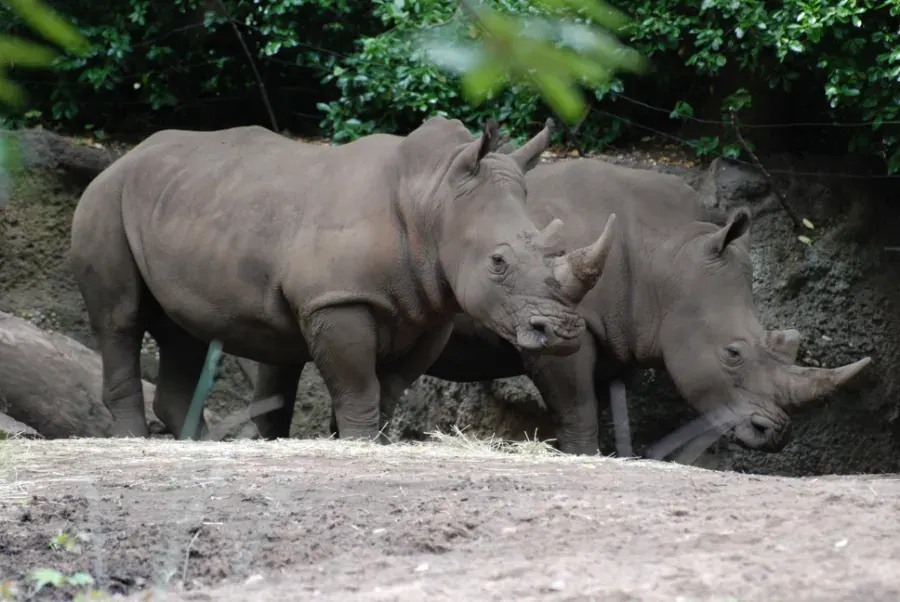
To compensate, rhinos have excellent hearing, aided by large, tube-shaped ears that can rotate independently to pinpoint the direction of a sound without needing to turn the head or body at all.
Smell Is the Dominant Sense
Smell is by far a rhino's most important sense, used to track other rhinos through scent marking, locate food, and detect approaching danger; the olfactory portion of a rhino's brain is proportionally larger than its entire cerebrum.
A Team Effort With Oxpeckers
Rhinos in parts of Africa have a mutually beneficial relationship with oxpecker birds, which perch on their backs feeding on ticks and other parasites while letting out sharp alarm calls at the first sign of an approaching threat — effectively acting as an extra set of eyes for a rhino that can't see well itself.