Two Continents, Five Species
Rhinoceroses today survive as five species split between Africa and Asia, the last remnants of a family that once included dozens of forms across most of the northern hemisphere. Each species differs sharply in horn number, lip shape and skin texture, reflecting very different diets and habitats.
White Rhino
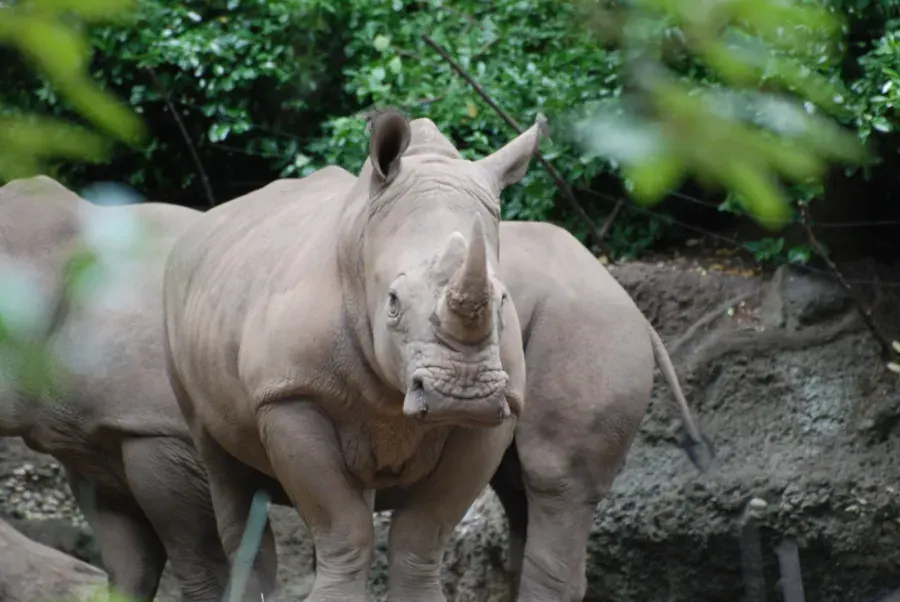
Ceratotherium simum is the largest living rhino and the most numerous, with a broad, square lip built for grazing grass. Two subspecies exist: the southern white rhino, recovered from near-extinction to around 16,000 animals, and the northern white rhino, functionally extinct with only two elderly females left alive under permanent guard.
Black Rhino
Diceros bicornis is smaller than the white rhino despite the misleading name difference — both are grey — and is distinguished by a pointed, prehensile upper lip used to grasp leaves and twigs. Populations collapsed by 96 percent between 1970 and 1992 under intense poaching, though numbers have since roughly doubled from that low point to around 6,000.
Indian Rhino
Rhinoceros unicornis, also called the greater one-horned rhino, carries a single horn and thick, plated-looking skin that gives it an almost armored appearance. Confined to floodplain grasslands in India and Nepal, it has recovered from under 200 individuals a century ago to around 4,000 today, one of conservation’s clearer success stories.
Javan and Sumatran Rhino
The Javan rhino, similar in build to the Indian rhino but smaller, survives as a single population of around 75 animals in one Indonesian national park. The Sumatran rhino, the smallest living species and the only Asian rhino with two horns, is covered in reddish hair and numbers fewer than 50 — both species among the most endangered large mammals on Earth.