A Family Without Lungs
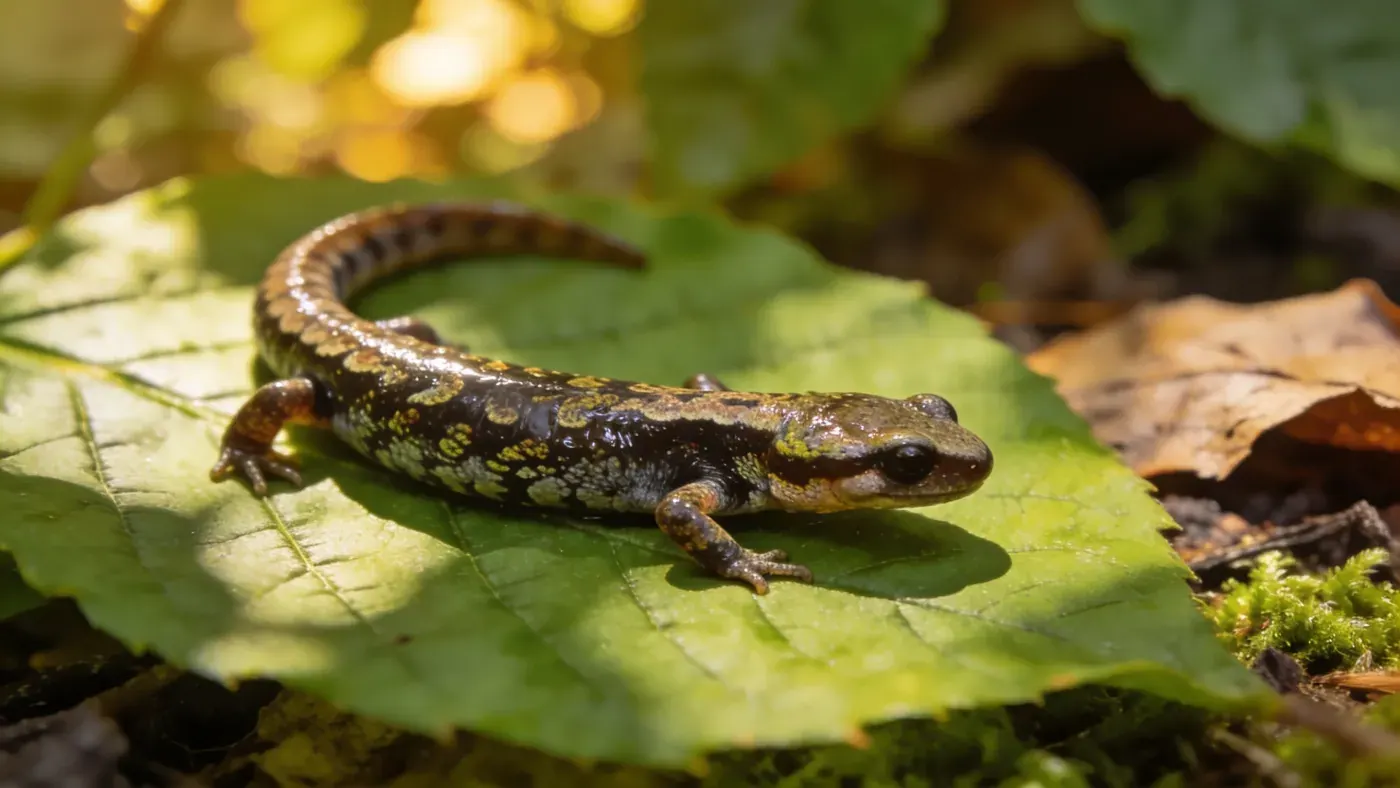
The family Plethodontidae, the largest group of salamanders, includes many species that have no lungs at all.
Breathing Through Skin and Mouth
These lungless salamanders absorb oxygen directly through their moist skin and the lining of their mouth, a method that requires them to stay in damp environments to keep their skin functional for gas exchange.
A Trade-Off That Shaped Their Bodies
Losing lungs likely helped these salamanders stay lighter and less buoyant in fast-moving streams, and freed up space in a slender body plan. Many species also lost their lungs' supporting rib cage movements, breathing instead through a distinctive throat-pumping motion called buccal pumping that moves air and moisture across the mouth lining.
Why Habitat Loss Hits Them Hardest
Because their skin must stay constantly moist to breathe, lungless salamanders are especially sensitive to drying leaf litter, forest clearing, and climate shifts — making them one of the clearest early indicators of a forest's ecological health.