A Diverse Order of Amphibians
The order Caudata includes roughly 700 described species split across nine or so living families, ranging from finger-length woodland dwellers to the nearly six-foot Chinese giant salamander. Nearly all share the same basic body plan — a long tail, four short legs, and moist, permeable skin — but how they breathe, where they live, and how they raise young varies enormously from family to family.
Lungless Salamanders (Plethodontidae)
More than two-thirds of all salamander species belong to this one family. They have no lungs at all, breathing entirely through their skin and the moist lining of their mouth, which limits them to cool, damp habitats like forest leaf litter and streambanks. Woodland salamanders and the many climbing salamanders of Central America belong here.
Mole Salamanders (Ambystomatidae)
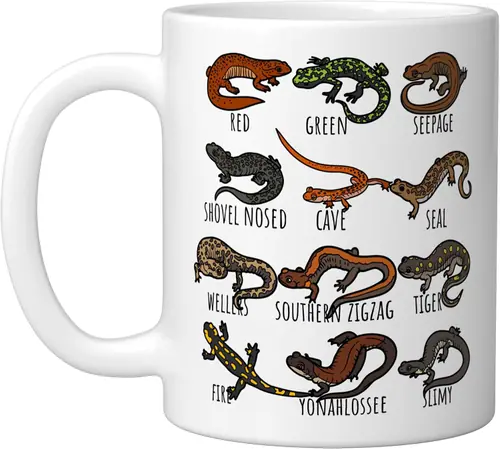
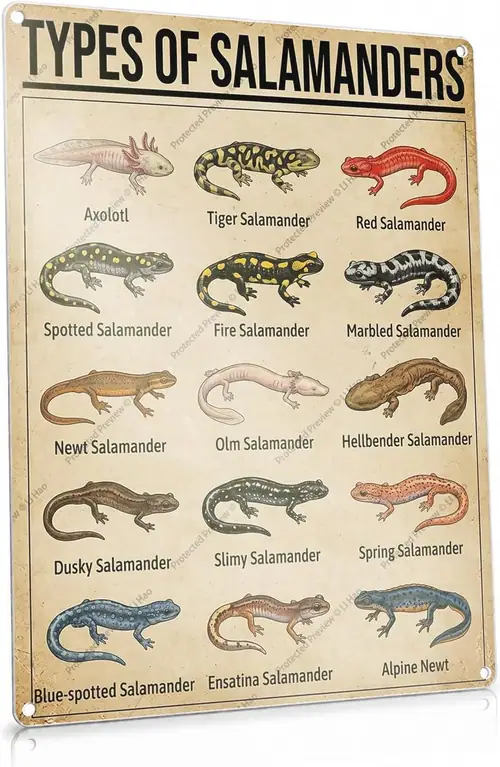
Stocky, wide-headed salamanders that spend most of the year burrowed underground, only emerging to breed in vernal pools. The tiger salamander and spotted salamander are classic examples, and the family also includes the axolotl, a Mexican species that famously keeps its gills and stays fully aquatic for its entire life instead of transforming into a land-dwelling adult.
True Salamanders and Newts (Salamandridae)
This family includes the boldly patterned fire salamander of Europe as well as most newts, which differ from other salamanders by spending much of adulthood in water with rough, dry-looking skin on land that turns smooth during their aquatic breeding season. Many species in this group produce toxic skin secretions and advertise the fact with bright warning colors.
Giant Salamanders (Cryptobranchidae) and Waterdogs (Proteidae)
The Chinese and Japanese giant salamanders — the largest amphibians alive — belong to an ancient, fully aquatic family that breathes largely through folds of loose skin. North America's mudpuppies and Europe's cave-dwelling olm belong to a separate aquatic family that never leaves the water and, unlike most salamanders, keeps its feathery external gills for its entire life.