Home / Marine Life / Sea Otters
Marine Life · Mustelids
Sea Otter
Enhydra lutris
Endangered
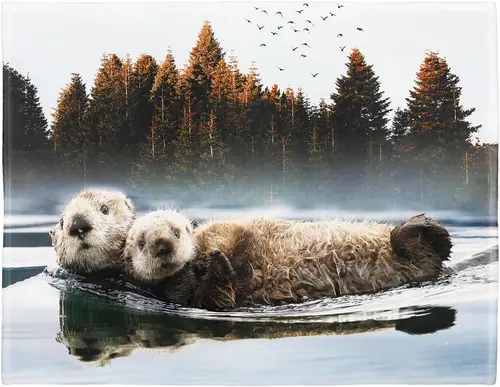
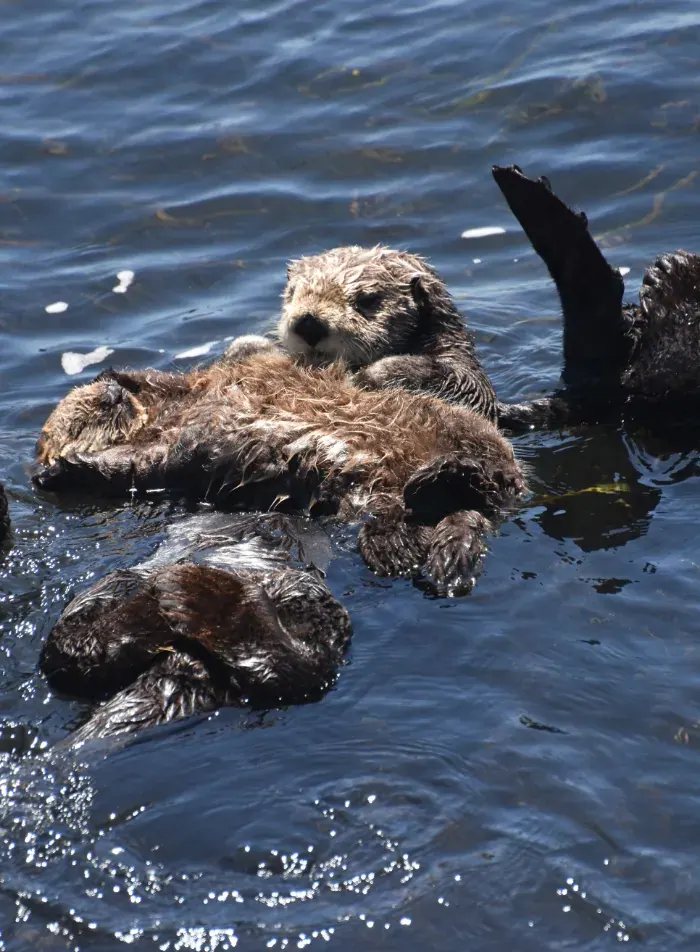
The sea otter is a marine mammal found along the coasts of the North Pacific, from California to Alaska and across to Russia and Japan. The heaviest member of the weasel family but among the smallest marine mammals, sea otters spend almost their entire lives in the water, floating on their backs to eat, groom, sleep, and raise pups. They are best known for their extraordinarily dense fur — the thickest coat of any animal — and for using rocks as tools to crack open shellfish.
Classification
Kingdom: Animalia
Phylum: Chordata
Class: Mammalia
Order: Carnivora
Family: Mustelidae
Subfamily: Lutrinae
Genus: Enhydra
Species: lutris
Size
4–5 ft. long including tail; 30–100 lbs, with males noticeably larger than females.
Habitat
Nearshore kelp forests and rocky coastlines of the North Pacific Ocean.
Description
Dense brown fur, a blunt face with prominent whiskers, and webbed hind feet built for swimming.
Diet
Carnivore — sea urchins, clams, crabs, mussels, and other invertebrates.
Senses
Sensitive whiskers and forepaws used to locate prey by touch in murky water.
Communication
Chirps, whistles, and screams; mothers and pups use distinct contact calls.
Gestation
4–12 months, including a period of delayed implantation.
Birth & Litter Size
Almost always a single pup, born in the water.
Sexually Mature
Females around 3–4 years; males around 5–6 years.
Life Span
10–20 years in the wild.
Social Structure
Rests in single-sex groups called rafts, sometimes numbering in the hundreds.
Did You Know?
A sea otter's fur can contain up to a million hairs per square inch — the densest coat of any animal on Earth — which is why sea otters rely on grooming and trapped air, rather than blubber, to stay warm.
Did You Know?
Sea otters are one of the few animals known to use tools, cracking open shellfish and urchins against a rock balanced on their chest while floating on their backs.
Did You Know?
Sea otters often wrap themselves in kelp before resting or sleeping, anchoring themselves in place so they don't drift away from their raft on the current.
Sea Otter in Foreign Languages
Frenchloutre de mer
GermanSeeotter
Spanishnutria marina
Portugueselontra-marinha
Italianlontra marina
Dutchzeeotter
Russianmorskaya vydra
Japaneserakko
Chinese (Mandarin)hǎi tǎ
Koreanhaedal
Aleutchungisix
Alutiiqaq'laq