The Most Numerous Subspecies
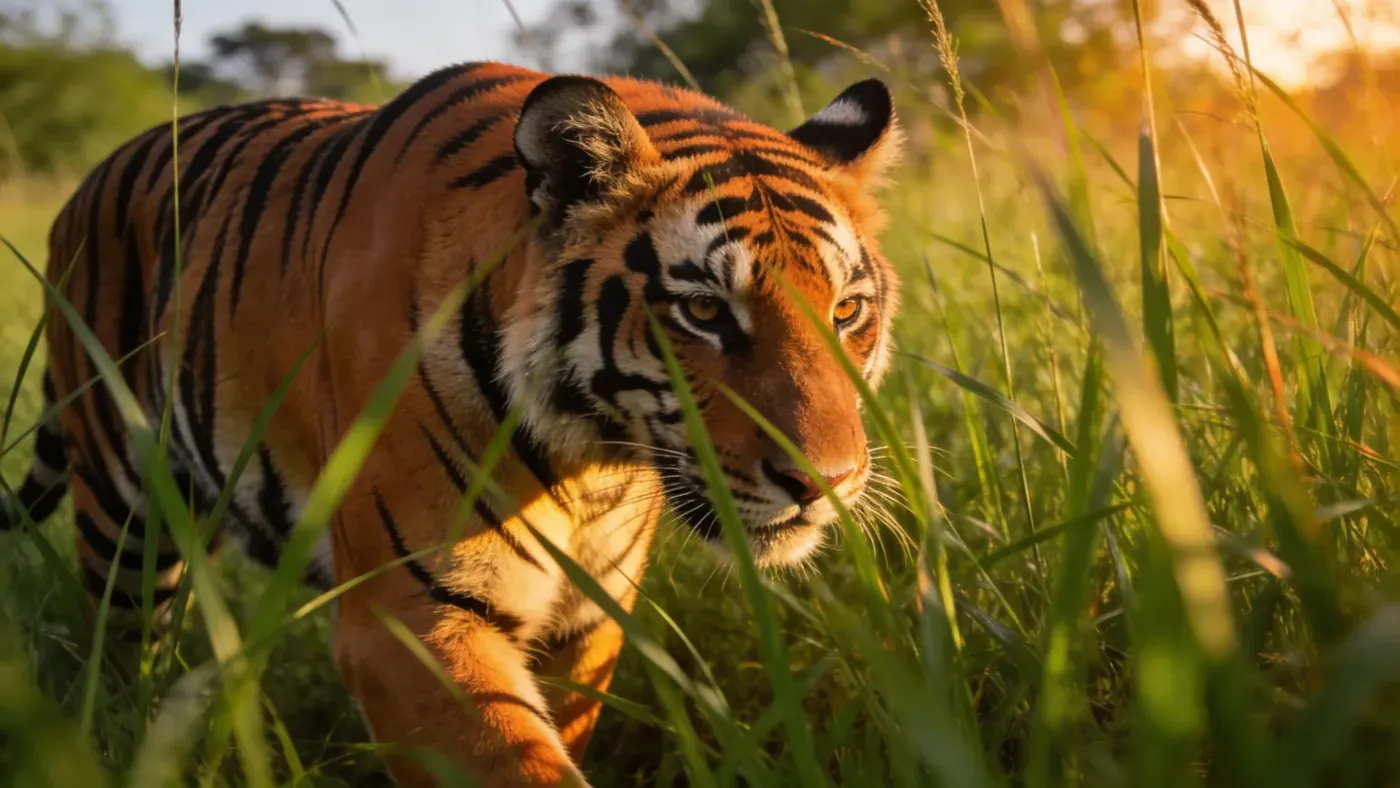
The Bengal, or royal Bengal, tiger is the most common tiger subspecies alive today and the one most people picture when they think of a tiger — its scientific name, Panthera tigris tigris, is the nominate form of the species. Despite its relative abundance compared with other subspecies, the Bengal tiger has been classified as endangered since 2010, with roughly 2,500 individuals estimated to remain in the wild.
Range
India holds by far the largest population, with an estimated 1,700 to 1,900 Bengal tigers, most concentrated in a network of designated tiger reserves. Bangladesh supports the second-largest population at around 440 individuals, largely within the Sundarbans mangrove forest. Much smaller populations persist in Nepal (roughly 160 to 250) and Bhutan (67 to 81), both nations investing heavily in anti-poaching enforcement to protect what remains.
Appearance and the White Tiger Mutation
A Bengal tiger has a pale orange to yellow coat with black stripes and white marking on the face and inner limbs. A rare recessive gene can produce an all-white coat with blue eyes — not albinism, but a distinct pigment mutation. White tigers are rare in the wild but common in zoos, where their popularity has led to sustained inbreeding among captive individuals, a practice that shortens their lifespans and carries no conservation value for the wild subspecies.
Size and Diet
A large male Bengal tiger can reach up to 717 pounds and 11 feet in length at the extreme end, though the average adult male is closer to 500 pounds; females run smaller, averaging around 300 pounds. As an exclusive carnivore, the Bengal tiger prefers large ungulates and wild boar, with smaller animals such as porcupines, peacocks and hares making up a minor share of its diet. Where human settlement has encroached on tiger habitat, Bengal tigers increasingly take livestock, a major driver of human-tiger conflict.
Social Life
Like other tigers, Bengal tigers are largely solitary — adults hold and defend individual home ranges and come together mainly to mate. The one lasting social bond is between a mother and her cubs, which typically stay with her for around two years before dispersing to establish territories of their own.