Listed as Vulnerable
The walrus is currently classified as Vulnerable, with population trends varying by region — some populations have recovered from historical overhunting, while others face renewed pressure from a changing Arctic climate.
Vanishing Sea Ice Changes Everything
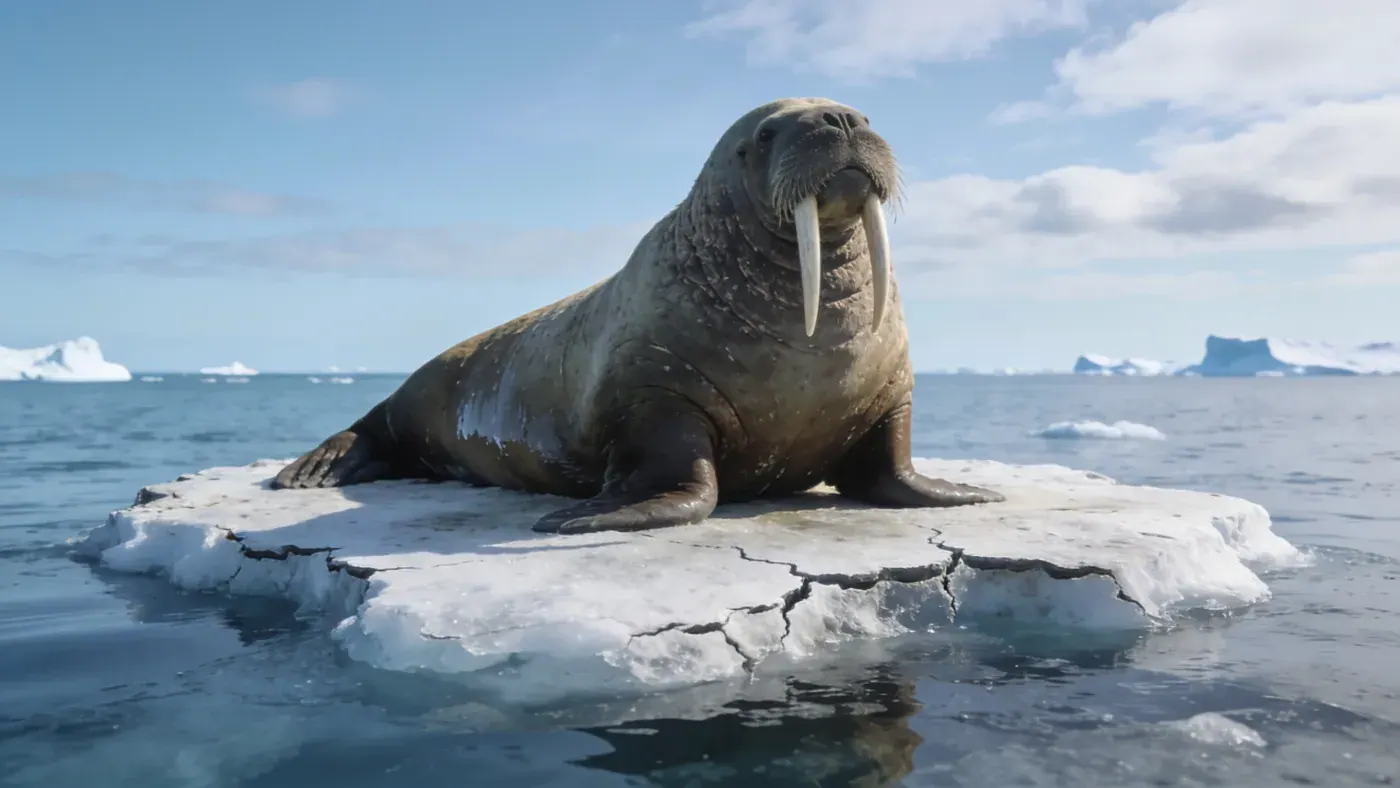
Walruses rely on sea ice as a resting platform between dives for food, and as Arctic sea ice shrinks and retreats farther from shore each summer, walruses are forced onto crowded land-based haul-outs, sometimes far from their preferred feeding grounds.
Mass Stampedes at Crowded Beaches
These crowded land haul-outs have led to documented mass casualty events, where sudden noise or disturbance triggers a stampede toward the water and tramples smaller or weaker animals, particularly calves, a risk that didn't exist when herds spread out safely across sea ice.
Indigenous Hunting Rights and Conservation Coexist
Regulated subsistence hunting by Indigenous Arctic communities continues under conservation frameworks that aim to balance traditional cultural practices with sustainable population management, distinct from the large-scale commercial hunting that devastated walrus numbers in past centuries.