Whiskers as a Sensing Tool
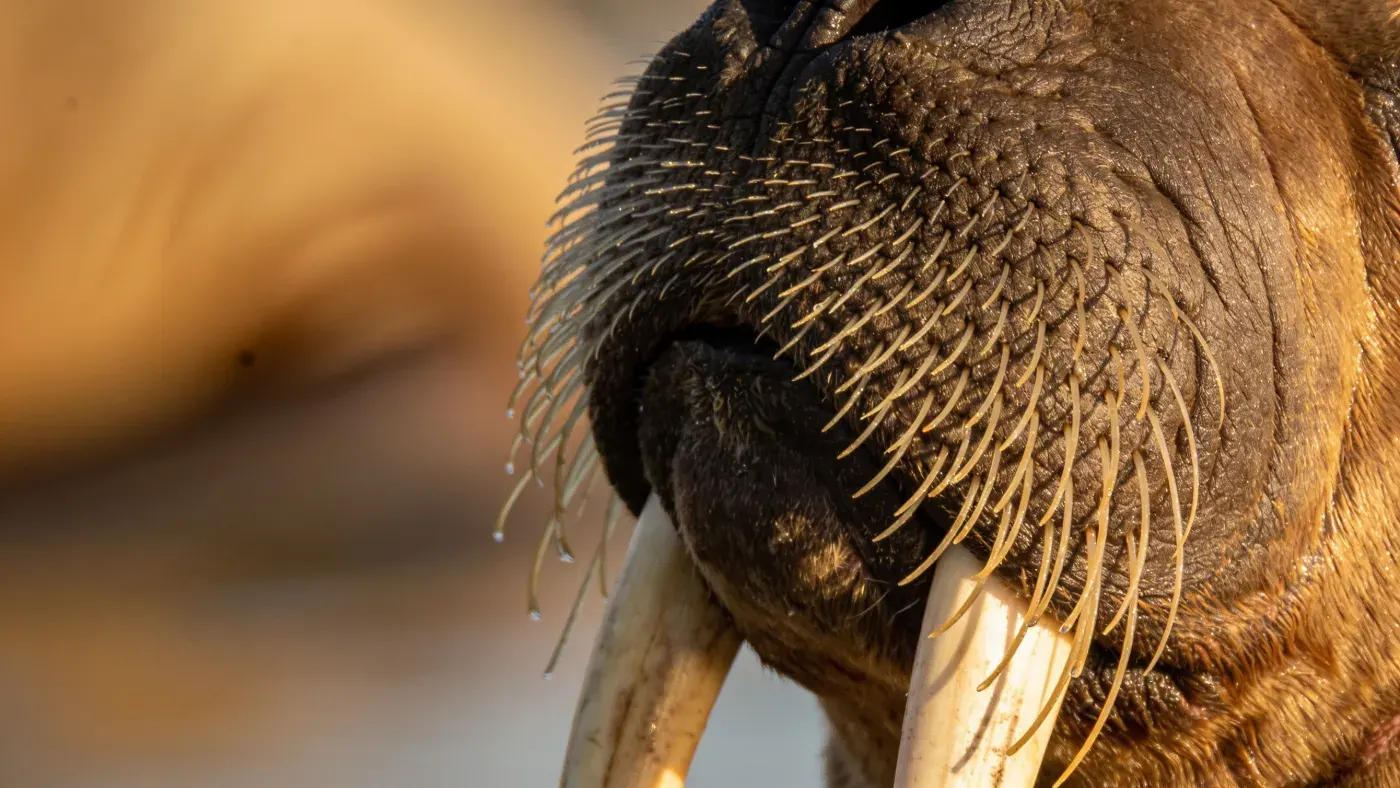
A walrus has hundreds of thick, sensitive whiskers called vibrissae that it uses to detect clams and other shellfish buried in the seafloor, relying on touch rather than sight in the often murky or dark waters where it feeds.
Suction Feeding
Once a walrus locates a shellfish, it uses powerful suction created by its mouth and tongue to extract the soft body from the shell, allowing it to consume large numbers of clams without swallowing the hard shells.
A Diet Built Around Bottom-Dwellers
Walruses can eat thousands of clams in a single feeding session, with their whisker-guided foraging technique allowing them to locate prey efficiently across the seafloor of their Arctic and sub-Arctic range.