One of the Longest Migrations of Any Mammal
Gray whales undertake one of the longest migrations of any mammal, traveling roughly 10,000 to 14,000 miles round trip each year between Arctic feeding grounds and warm breeding lagoons off the coast of Mexico.
Feeding by Scooping Up the Seafloor
Unlike most baleen whales that filter prey from open water, gray whales feed mainly by rolling onto their side and scooping mud from the ocean floor, straining out small crustaceans and other invertebrates through their baleen — a distinctive bottom-feeding style among large whales.
Covered in Barnacles and Whale Lice
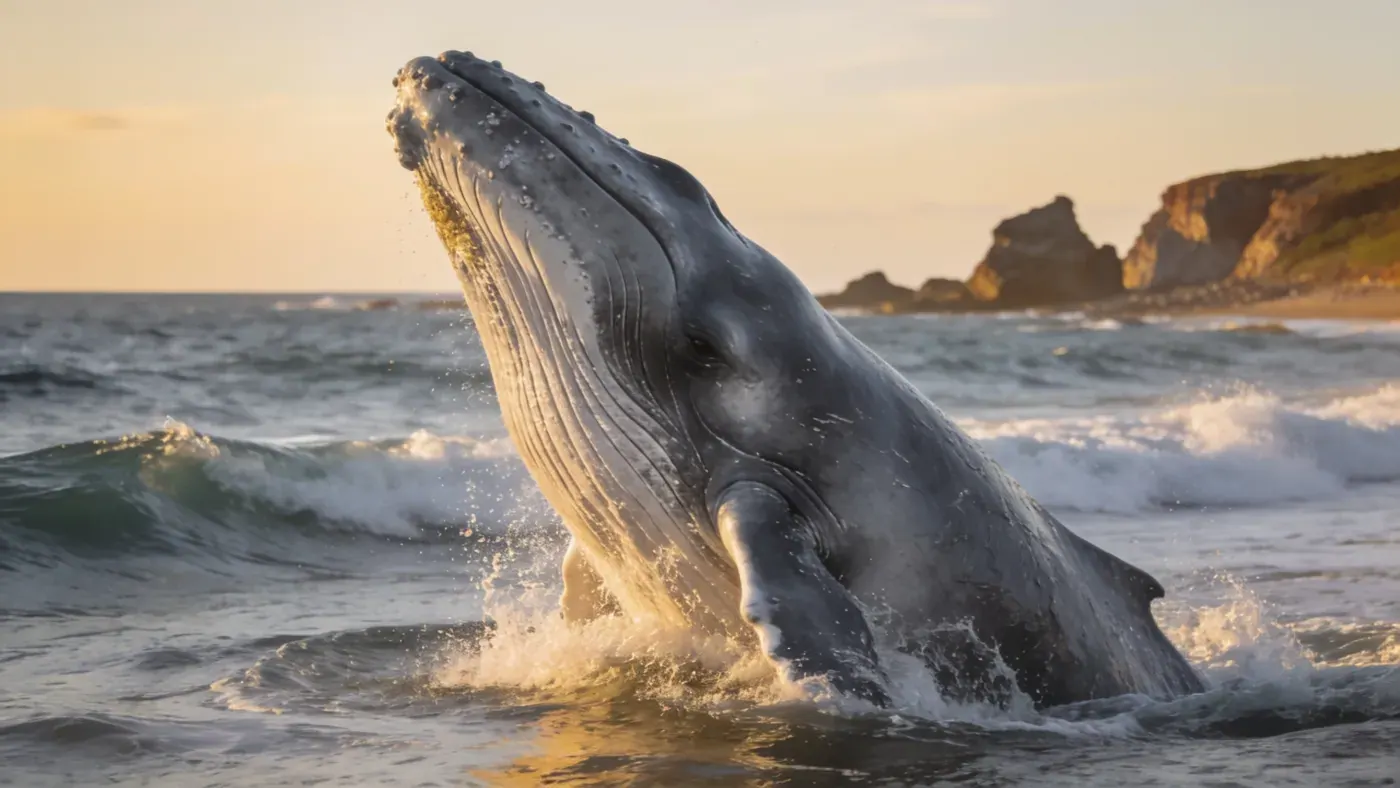
Gray whales are known for the mottled, patchy gray coloring caused by encrusting barnacles and small crustaceans called whale lice that live on their skin — a distinctive, weathered look that gives the species its name.
A Rare Conservation Success Story
The eastern North Pacific gray whale population was hunted to the brink of extinction but has recovered to healthy numbers under international protection, making it one of the clearest whale conservation success stories, even as a separate western Pacific population remains critically endangered.