The Largest Animals on Earth
The blue whale can exceed 90 feet in length and weigh as much as 200 tons — larger than any dinosaur known to have existed. Its heart alone can weigh as much as a small car, and its aorta is wide enough for a person to crawl through.
Two Very Different Feeding Strategies
Whales split into two groups: baleen whales, like the blue and humpback, filter tiny krill and plankton through comb-like plates instead of teeth, while toothed whales, like the sperm whale and orca, actively hunt fish and squid.
Built to Dive Deep
Sperm whales can dive over 7,000 feet in search of giant squid, holding their breath for up to 90 minutes. Their bodies collapse air-filled cavities under pressure and store extra oxygen in muscle tissue rather than lungs.
A Blowhole, Not a Nose
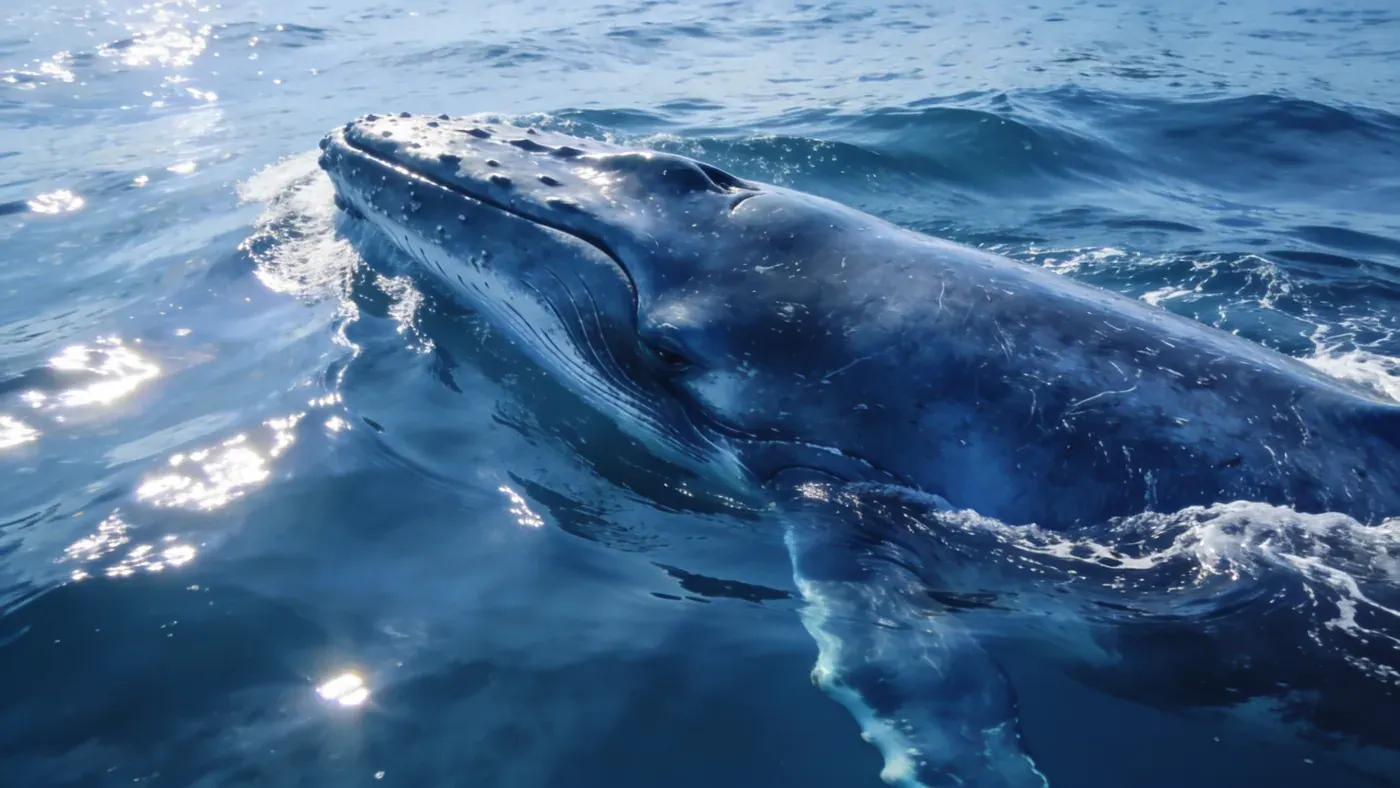
Whales breathe air through one or two blowholes on top of the head, allowing them to exhale and inhale in a single breath at the surface before diving again. The visible spray is condensed water vapor, not seawater.
Nearly 90 Species Worldwide
Cetaceans — whales, dolphins and porpoises — number close to 90 species, ranging from the 90-foot blue whale to dolphins under 6 feet long, found in every ocean and several major river systems.