Classification
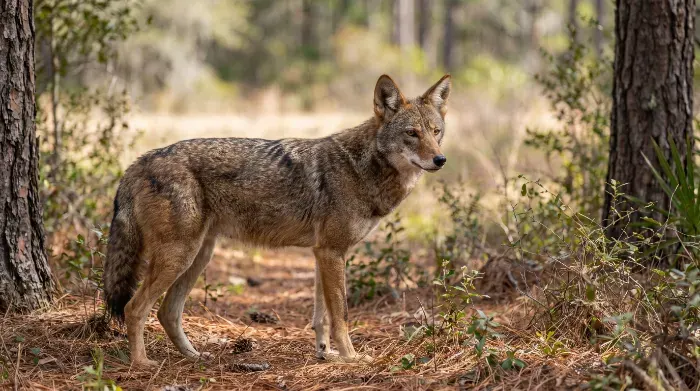
The red wolf (Canis rufus) is a distinct North American wolf species, smaller than the gray wolf but larger than the coyote — and, fittingly, genetic studies show its lineage carries a mix of both. Its reddish-tawny coat, most visible behind the ears and along the legs, is where the species gets its name.
Historic Range
Red wolves once ranged across the southeastern United States, from Texas to Florida and as far north as Pennsylvania and Ohio. Habitat loss, predator-control programs, and interbreeding with expanding coyote populations pushed the species to the brink through the 20th century — by 1980, the red wolf was declared extinct in the wild.
Recovery Program
A small number of red wolves were captured before the species disappeared entirely and became the founders of a captive breeding program run by the U.S. Fish and Wildlife Service. Starting in 1987, captive-bred wolves were reintroduced to northeastern North Carolina, in and around the Alligator River National Wildlife Refuge — still the only place red wolves live in the wild today.
Conservation Status
The red wolf is critically endangered — one of the most endangered canids in the world, with only a small number of individuals surviving in the wild alongside a larger captive-breeding population. Ongoing hybridization with coyotes remains one of the biggest threats to the species' genetic identity, alongside vehicle strikes and illegal killings within its very limited range.