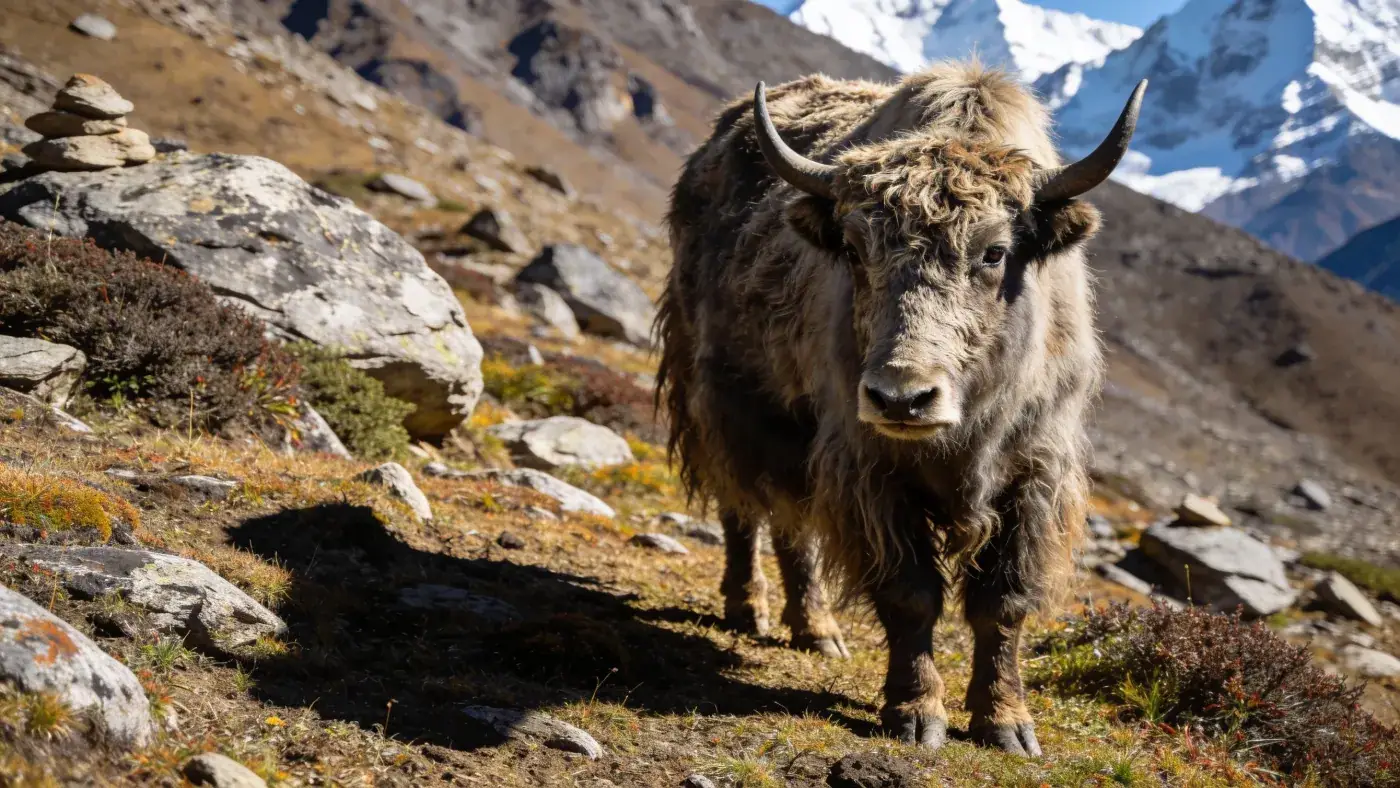
Built for Thin Air
Yaks have larger lungs and hearts relative to body size than lowland cattle, along with blood containing more oxygen-carrying red blood cells, adaptations that let them thrive at altitudes above 13,000 feet where oxygen is scarce.
A Thick Double Coat
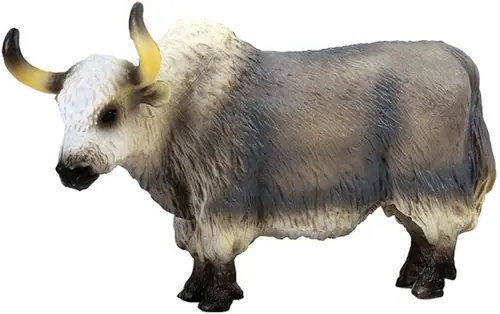
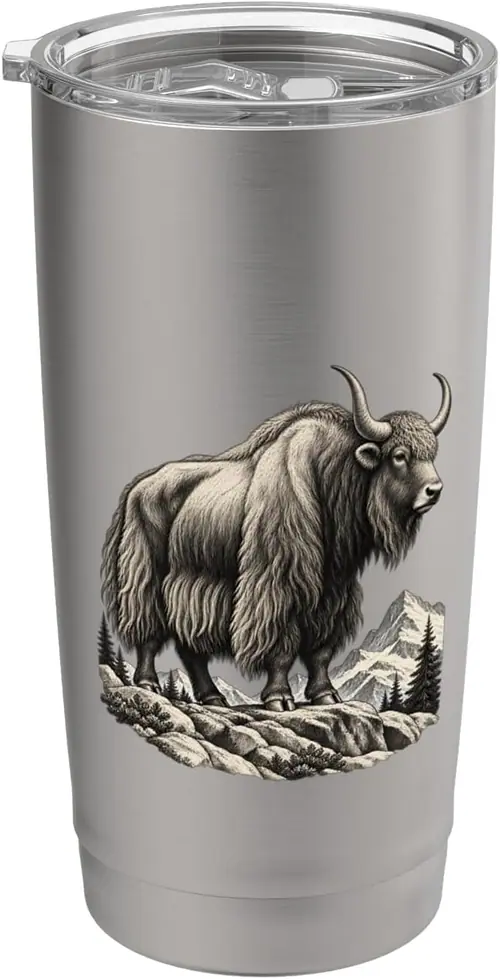
A dense undercoat combined with long, coarse outer hair insulates yaks against the extreme cold of the Himalayan and Tibetan plateau regions, where temperatures can plunge far below freezing for much of the year.
Efficient at Extracting Nutrition
Yaks are able to extract sufficient nutrition from the sparse, low-quality vegetation found at high altitude, an efficiency that domestic cattle at lower elevations generally cannot match.