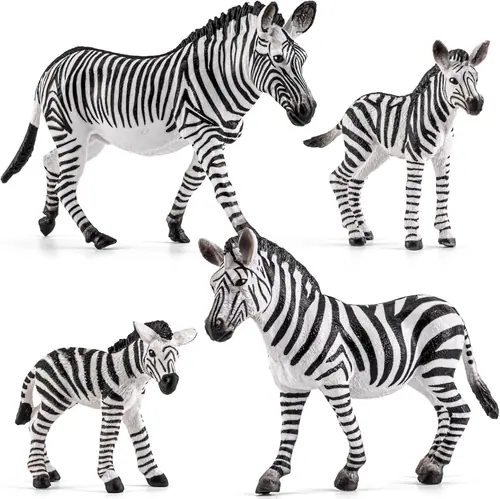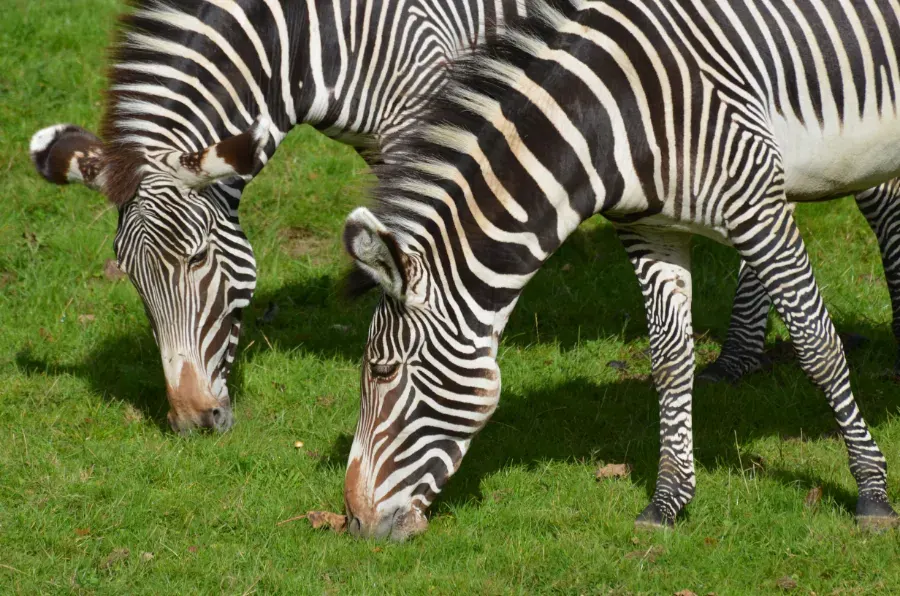
A Question With Several Competing Answers
Few animal features have generated as much scientific debate as the zebra’s stripes. At least four serious hypotheses have been tested over the past century — camouflage, predator confusion, temperature regulation, and insect deterrence — and current evidence points most strongly toward one of them, though the debate is not entirely settled.
Not Really Camouflage
The classic assumption that stripes break up a zebra’s outline against grass has not held up well under testing; simulations of lion and hyena vision suggest stripes are not particularly effective camouflage at the distances and light levels those predators actually hunt in, and zebras are not disproportionately hard for big cats to catch compared with other prey of similar size.
The Fly Evidence
The strongest current evidence supports biting-fly deterrence. Tsetse flies and horseflies are shown experimentally to land far less often on striped surfaces than on solid-coloured ones of the same average brightness, and zebra range overlaps closely with tsetse fly distribution across Africa. The stripes appear to disrupt the polarised light patterns flies use to locate a host, along with visual motion cues as the zebra moves.
A Secondary Cooling Effect
Some research suggests the black and white stripes heat unevenly in sunlight, generating small air currents across the coat that may aid cooling — a plausible secondary benefit rather than the primary driver, and one that would not by itself explain why zebras but not similarly sun-exposed antelope evolved the pattern.
Individual Identification
Whatever the evolutionary origin, stripes do serve a confirmed secondary function: each zebra’s pattern is unique, and foals are known to recognise their mother partly by her specific stripe pattern in the first hours and days of life, when staying close to the right adult in a crowded herd matters most.