One Genus, Three Zebras
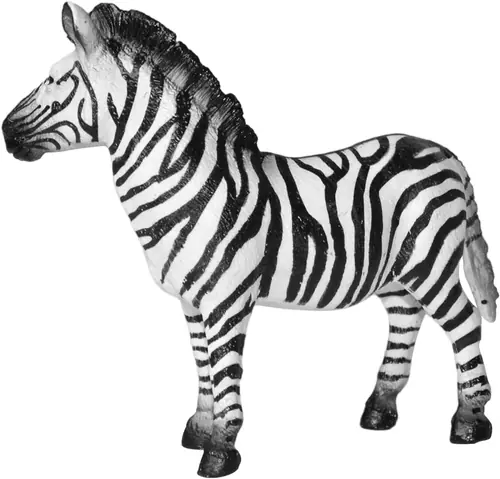
All three living zebra species belong to the genus Equus, alongside horses and wild asses, and each occupies a different part of Africa with its own stripe pattern, social structure and conservation status. Telling them apart is mostly a matter of stripe width, ear shape and the presence or absence of a throat dewlap.
Plains Zebra
Equus quagga is the most numerous and widely distributed, found across eastern and southern Africa’s grasslands in broad, bold stripes that wrap fully around the belly. It lives in stable family harems and forms the enormous mixed herds seen migrating alongside wildebeest in East Africa. Population: several hundred thousand, listed as Near Threatened.
Mountain Zebra
Equus zebra is smaller and more compact, adapted to the rocky, mountainous terrain of Namibia, South Africa and Angola. It is recognisable by a small dewlap of skin under the throat and a gridiron pattern of narrow stripes over the rump. Two subspecies exist; the Cape mountain zebra was reduced to under 100 animals by the 1950s and has since recovered to several thousand through protection.
Grevy’s Zebra
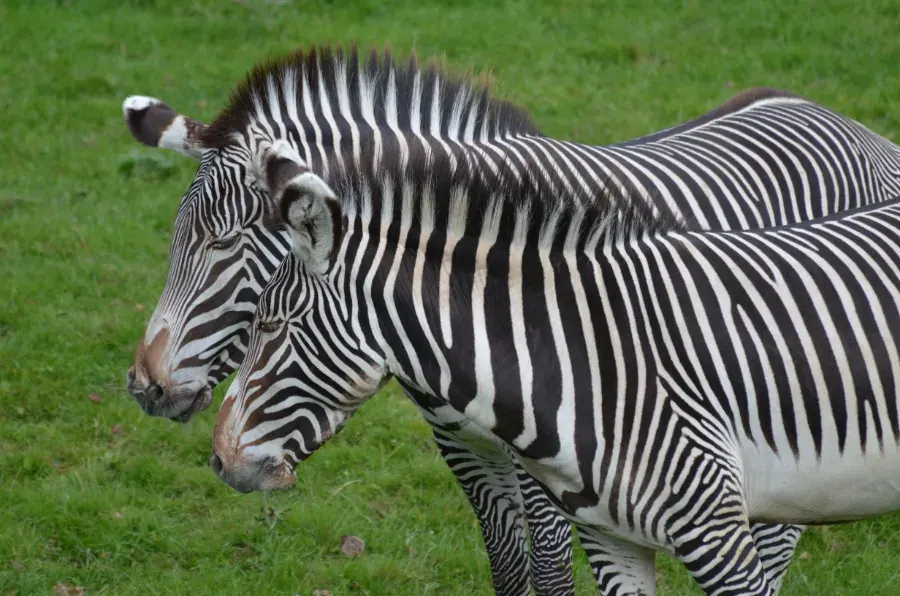
Equus grevyi is the largest and most distinctive, with narrow, densely packed stripes, a white belly, and large rounded ears resembling a mule’s. Confined now to northern Kenya and a small part of Ethiopia, it is the only zebra with a largely non-territorial, loosely associating social structure rather than stable harems. It is the most endangered of the three, with under 3,000 remaining.
A Fourth, Extinct Cousin
The quagga, once considered a separate species, was in fact a subspecies of plains zebra found in South Africa, distinguished by stripes confined to the head and forequarters that faded into a plain brown body and legs. It was hunted to extinction in the wild by the 1870s, and the last captive individual died in an Amsterdam zoo in 1883.